
How to Spot a Honey Pot Scam: Safety Guide for Crypto Investors
Introduction
Honey pot scams are one of the most insidious threats in decentralized finance (DeFi). A honey pot is a malicious smart contract that appears to offer a lucrative opportunity—such as a token that can be bought but not sold—designed to trap unsuspecting investors. Once you send funds to the contract, the scammer can drain your wallet or prevent you from withdrawing your assets. This guide will teach you how to identify honey pot scams, protect your portfolio, and navigate DeFi safely.
Key Concepts
- Honey Pot Contract: A smart contract that allows users to deposit tokens but restricts or prevents withdrawals, often through hidden functions or malicious code.
- Liquidity Trap: The scammer creates a token with a fake liquidity pool, making it impossible to sell the token after purchase.
- Rug Pull Variant: Unlike a typical rug pull where the developer drains liquidity, a honey pot locks your funds in the contract, often requiring a fee or impossible condition to release them.
- Hidden Functions: Scammers embed functions like
transfer()orapprove()that appear normal but have backdoors that only the owner can execute. - Fake Trading Volume: Honey pots often show artificial trading activity on decentralized exchanges (DEXs) to lure victims.
Pro Tips
- Audit the Contract: Always review the smart contract code on block explorers like Etherscan or BscScan. Look for functions like
transferFromorburnthat may be restricted to the owner. - Check Liquidity Locks: Use tools like RugDoc or TokenSniffer to verify if liquidity is locked and for how long. Unlocked liquidity is a red flag.
- Test with Small Amounts: Before committing significant capital, try to sell a tiny portion of the token. If the transaction fails repeatedly, it could be a honey pot.
- Analyze Holder Distribution: If a single wallet holds >90% of the token supply, the developer can manipulate the price and trap buyers.
- Use Honeypot Detectors: Platforms like Honeypot.is or Token Sniffer can automatically scan contracts for known honey pot patterns.
FAQ Section
What is a honey pot scam in crypto?
A honey pot scam is a malicious smart contract that allows you to buy a token but prevents you from selling it. The scammer profits from your initial purchase and traps your funds in the contract.
How can I detect a honey pot before investing?
Use tools like Honeypot.is, RugDoc, or TokenSniffer to scan the contract. Also, check for locked liquidity, unusual holder distribution, and hidden functions in the code.
Can I recover funds from a honey pot scam?
Recovery is extremely difficult because the scammer controls the contract. In rare cases, if the contract has a vulnerability, ethical hackers may help, but prevention is the best strategy.
Are honey pots common on all blockchains?
They are most common on Ethereum, Binance Smart Chain, and other EVM-compatible chains due to the ease of deploying smart contracts. Always verify contracts on these networks.
Conclusion
Honey pot scams prey on greed and inexperience, but with the right knowledge, you can avoid them entirely. Always audit smart contracts, use detection tools, and test with small amounts before committing capital. Remember: if an opportunity seems too good to be true, it probably is. Stay vigilant, and never invest more than you can afford to lose.
For more details on this, check out our guide on Top RWA Projects to Watch in 2026: Tokenization Guide.
You might also be interested in reading about How to Bridge Assets Across Blockchains Safely: A 2025 Step-by-Step Guide.

Mastering Japanese Candlestick Patterns: The Trader’s Visual Language
Imagine being able to glance at a chart and instantly read the emotional battle between buyers and sellers. That’s exactly what Japanese candlestick patterns allow you to do. Developed by rice traders in 18th-century Japan, these patterns have stood the test of time and remain one of the most reliable tools for predicting price movements. Whether you’re a beginner or an intermediate trader, learning candlestick patterns is like unlocking a secret code to the market’s next move.
How It Works
Each candlestick represents a specific time period (e.g., 1 hour, 1 day). The body shows the opening and closing prices, while the wicks (or shadows) show the high and low. The color tells you whether the price closed higher (bullish, often green/white) or lower (bearish, often red/black). But the real magic happens when you combine multiple candles into recognizable patterns.
The Setup
Here are three essential patterns every trader should know:
1. Doji – This pattern forms when the opening and closing prices are nearly equal, creating a small body with long wicks. It signals indecision in the market. A Doji after a strong uptrend or downtrend often warns of a potential reversal.

2. Hammer and Shooting Star – Both have small bodies and long lower wicks. A Hammer appears during a downtrend and suggests a bullish reversal. A Shooting Star appears during an uptrend and suggests a bearish reversal. Look for these at key support or resistance levels for higher probability trades.
3. Engulfing Pattern – This is a two-candle pattern. A bullish engulfing pattern occurs when a small bearish candle is followed by a larger bullish candle that fully “engulfs” it. A bearish engulfing pattern is the opposite. It signals strong momentum in the direction of the engulfing candle.
To trade these patterns, wait for the pattern to fully form (the close of the last candle). Then enter a trade in the direction of the pattern’s signal. For example, after a bullish engulfing pattern, you might go long with a stop loss below the low of the pattern.
Risk Management
No pattern is 100% accurate. Always use a stop loss to protect your capital. A good rule is to place your stop just below the low of a bullish pattern or just above the high of a bearish pattern. Also, never risk more than 1–2% of your account on a single trade. Combine candlestick patterns with other tools like support/resistance or trendlines to increase your odds.
Conclusion
Japanese candlestick patterns give you a clear, visual edge in the markets. Start by practicing on a demo account, focus on a few key patterns, and always manage your risk. Over time, you’ll develop an intuitive feel for price action. Happy trading, and remember – every candle tells a story.
What is Impermanent Loss? Liquidity Providing Explained
Introduction
Impermanent loss is one of the most misunderstood risks in decentralized finance (DeFi). If you’ve ever provided liquidity to an automated market maker (AMM) like Uniswap, PancakeSwap, or SushiSwap, you’ve likely encountered this concept. In simple terms, impermanent loss occurs when the price of assets in a liquidity pool changes compared to when you deposited them. The more volatile the price movement, the greater the loss. This guide will break down what impermanent loss is, how it works, and how you can minimize it.
Key Concepts
What is a Liquidity Pool?
A liquidity pool is a smart contract that holds funds supplied by users (liquidity providers). These funds are used to facilitate trades on a decentralized exchange. In return for providing liquidity, you earn a share of the trading fees.
How Does Impermanent Loss Happen?
Impermanent loss happens because AMMs use a constant product formula (e.g., x * y = k) to maintain price equilibrium. When the market price of one asset changes relative to the other, arbitrageurs trade against the pool to bring it back in line. This process leaves liquidity providers with a different proportion of assets than they originally deposited. If the price returns to the original level, the loss disappears — hence the term “impermanent.” However, if you withdraw while the price is still different, the loss becomes permanent.
Example of Impermanent Loss
Imagine you deposit $1,000 worth of ETH and $1,000 worth of USDC into a 50/50 pool. If ETH’s price doubles, arbitrageurs will buy ETH from the pool until the ratio adjusts. When you withdraw, you’ll have less ETH and more USDC than you started with. The total value of your position may be less than if you had simply held both assets outside the pool.
Pro Tips
- Choose stablecoin pairs: Pools like USDC/USDT have minimal price divergence, so impermanent loss is nearly zero.
- Look for high trading volume: High fees can offset impermanent loss over time.
- Use concentrated liquidity: Platforms like Uniswap v3 let you focus liquidity in a narrow price range, reducing exposure to large price swings.
- Monitor volatility: Avoid providing liquidity to highly volatile pairs unless you are confident in the fee income.
FAQ Section
Is impermanent loss guaranteed?
No. If the price returns to the original level at the time of withdrawal, there is no loss. It only becomes permanent when you withdraw at a different price ratio.
Can impermanent loss be avoided?
It cannot be completely avoided in volatile pairs, but you can minimize it by choosing stablecoin pools, using single-sided liquidity platforms, or providing liquidity in pools with low price volatility.
How is impermanent loss calculated?
It is typically expressed as a percentage of the value you would have had if you simply held the assets. Many DeFi dashboards and calculators can estimate it for you.
Does impermanent loss apply to all DEXs?
It applies to any AMM-based DEX that uses a constant product formula. Some newer models (like Curve’s stable swap) reduce impermanent loss for correlated assets.
Conclusion
Impermanent loss is a key risk for liquidity providers, but it doesn’t have to be a dealbreaker. By understanding how it works and choosing the right pools, you can earn attractive yields while keeping losses in check. Always weigh potential fee income against the risk of price divergence before committing funds. For more details on this, check out our guide on KYC vs No-KYC Exchanges: Privacy Guide 2026. You might also be interested in reading about Understanding Gas Fees: How to Save Money on Ethereum.
Unlock Market Secrets: The Wyckoff Method for Smarter Entries
Ever feel like the market is moving just before you click ‘buy’? That sinking feeling isn’t just bad luck — it’s often the footprint of what Richard Wyckoff called the ‘Composite Operator.’ Don’t worry, this isn’t some Wall Street conspiracy. The Wyckoff Method is a time-tested framework that helps you see exactly what big money is doing. Let’s break it down so you can finally trade with the smart money, not against it.
How it Works: The Three Laws
Wyckoff boiled down market behavior into three simple laws. First, Supply and Demand determine price direction — when demand exceeds supply, prices rise; when supply overwhelms demand, prices fall. Second, Cause and Effect means every price move (effect) is preceded by a period of accumulation or distribution (cause). Third, Effort vs. Result compares volume (effort) to price movement (result). If volume is high but price barely moves, the trend is likely to reverse.
Looking for altcoin opportunities and smooth trading? Try KuCoin.
The Setup: Accumulation & Distribution
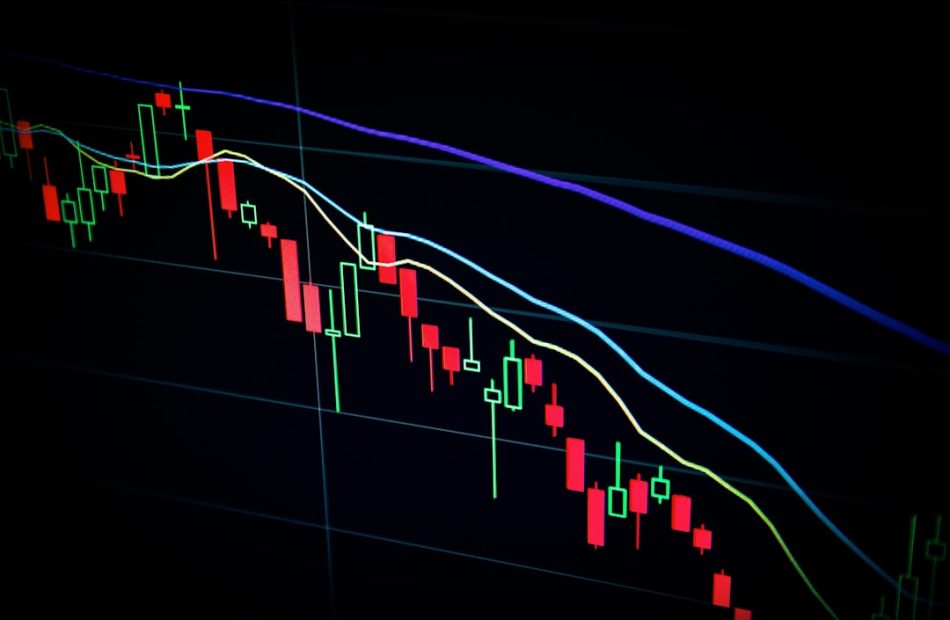
Wyckoff’s core patterns are Accumulation (smart money buying) and Distribution (smart money selling). Look for a sideways range after a downtrend. In accumulation, you’ll see a ‘spring’ — a quick dip below the range that snaps back up. This shakes out weak hands. In distribution, watch for an ‘upthrust’ — a spike above the range that quickly reverses. These are your entry triggers.
The Confirmation: Volume Is Key
Never enter just on price. Use volume to confirm. During accumulation, volume should increase on down moves (smart money buying) and decrease on up moves (lazy sellers). In distribution, volume spikes on up moves (smart money selling) and dries up on dips. This is the ‘Effort vs. Result’ law in action.
Risk Management
Even with Wyckoff, you need a safety net. Place your stop loss just below the spring low (in accumulation) or just above the upthrust high (in distribution). Risk no more than 1-2% of your account per trade. The beauty of Wyckoff is that these levels are clear and logical — no guesswork. If price breaks your level, the thesis is wrong. Move on.
Conclusion
The Wyckoff Method isn’t a crystal ball, but it’s the closest thing to a roadmap for market manipulation. Start by practicing on a demo account: mark the trading ranges, watch for springs and upthrusts, and confirm with volume. The more you see these patterns, the more you’ll trade with confidence. Remember, the market is a game of psychology — and now you know the rules.
Identity on Chain: KYC and Compliance in DeFi
Introduction: The Convergence of Identity and Decentralized Finance
Real World Assets (RWAs) represent a paradigm shift in finance: tangible or intangible assets—such as real estate, bonds, commodities, and private credit—are tokenized on a blockchain. This process enables fractional ownership, 24/7 liquidity, and unprecedented transparency, effectively bridging the gap between Traditional Finance (TradFi) and Decentralized Finance (DeFi). However, the core challenge remains identity verification. Off-chain, identity is managed through centralized Know Your Customer (KYC) procedures by banks and brokers. On-chain, identity must be verified without sacrificing the pseudonymity and composability that make DeFi attractive. This guide explores how KYC and compliance are evolving to support RWA tokenization, ensuring regulatory adherence while preserving user privacy.
How It Works: The Technical Process of On-Chain Identity
The integration of KYC into DeFi for RWAs follows a structured technical pathway:
- Tokenization: An asset (e.g., a commercial real estate property) is legally transferred to a Special Purpose Vehicle (SPV). The SPV issues digital tokens representing fractional ownership.
- Identity Verification: Investors must complete KYC/AML checks via a regulated third-party provider (e.g., a licensed custodian or identity oracle). Once verified, a soulbound token (SBT) or verifiable credential is minted to the investor’s wallet, proving compliance without revealing personal data.
- Oracle Integration: Smart contracts query on-chain identity oracles (e.g., Chainlink’s DECO or Civic) to confirm that a wallet holds a valid compliance token before allowing transactions, yield distribution, or voting.
- Blockchain Execution: The RWA token is traded or used as collateral only by wallets with valid identity credentials. All interactions are recorded on-chain, providing an immutable audit trail for regulators.
Investment Analysis: Pros, Cons, and Risks
Investing in tokenized RWAs with on-chain identity offers distinct advantages and challenges:
Pros
- Regulatory Compliance: Built-in KYC reduces legal risk for protocols and investors, attracting institutional capital.
- Enhanced Liquidity: Fractional ownership and 24/7 markets allow small investors to access assets previously reserved for institutions.
- Transparency: On-chain records of ownership, yield, and compliance are publicly verifiable.
Cons
- Privacy Trade-offs: KYC requirements reduce pseudonymity, potentially deterring DeFi-native users.
- Centralization Risk: Identity oracles and SPVs introduce trusted third parties, conflicting with pure decentralization.
- Smart Contract Risk: Bugs in compliance oracles or token contracts can lock funds or expose user data.
Risks
- Regulatory Uncertainty: Jurisdictions differ on token classification and KYC standards; a change in law could invalidate existing compliance frameworks.
- Data Breaches: Centralized identity databases remain vulnerable to hacks, potentially leaking sensitive investor information.
For a broader market view, check out our analysis on How Fiat On-Ramps Work: A Beginner’s Guide to Gate’s CIS Expansion. Investors often compare this to Tax Loss Harvesting in Crypto: A Guide for Traders.
Tool Recommendation: Navigating the Market
For traders seeking altcoin opportunities and smooth trading in tokenized assets, consider using a platform that balances compliance with liquidity. KuCoin offers a wide range of digital assets, including RWA tokens, with robust security and user-friendly interfaces. Its global reach and support for KYC-compliant trading make it a practical choice for both retail and institutional investors.
FAQ Section
What is a soulbound token (SBT) in KYC?
A soulbound token is a non-transferable token issued to a wallet after successful KYC verification. It acts as a permanent, verifiable credential that proves the wallet holder has passed identity checks, without revealing personal data on-chain.
Can I remain anonymous while investing in tokenized RWAs?
Generally, no. Most regulated RWA protocols require at least basic KYC (name, address, ID) to comply with securities laws. However, privacy-preserving technologies like zero-knowledge proofs allow you to prove compliance without exposing your full identity.
What happens if a KYC oracle fails?
If the identity oracle goes offline or is compromised, smart contracts may freeze asset transfers or yield distributions until the issue is resolved. Protocols often use multiple oracles and fallback mechanisms to mitigate this risk.
Conclusion
On-chain identity is the linchpin for mainstream adoption of Real World Assets in DeFi. While KYC introduces centralization and privacy trade-offs, it also unlocks institutional capital, regulatory clarity, and trust. As technology evolves—through zero-knowledge proofs and decentralized identity standards—the balance between compliance and pseudonymity will improve. For now, investors should prioritize platforms that offer robust security, transparent compliance, and liquid markets. The convergence of TradFi and DeFi is inevitable, and identity on chain is the bridge.
Stablecoin Yield Strategies: Low Risk Farming – A Comprehensive Guide
In the volatile world of cryptocurrency, stablecoins offer a safe harbor. But simply holding them means missing out on potential returns. This guide explores low-risk farming strategies that let you earn yield on your stablecoins while minimizing exposure to market fluctuations. Whether you’re a DeFi beginner or a seasoned investor, these strategies can help you generate consistent passive income.
Key Concepts
- Stablecoins: Cryptocurrencies pegged to a stable asset like the US dollar (e.g., USDT, USDC, DAI). They minimize price volatility.
- Yield Farming: The practice of lending or staking your crypto assets to earn rewards, often in the form of additional tokens or interest.
- Low-Risk Strategies: Approaches that prioritize capital preservation over high returns. Examples include lending on reputable protocols, providing liquidity to stablecoin-only pools, and using yield aggregators.
- APY (Annual Percentage Yield): The real rate of return earned on your investment, taking compounding into account.
- Impermanent Loss: A temporary loss in value when providing liquidity to a volatile pair. Stablecoin pairs (e.g., USDC/USDT) have minimal impermanent loss.
Pro Tips
- Start small: Test strategies with a minimal amount before committing larger funds.
- Diversify across platforms: Spread your stablecoins across multiple lending protocols (Aave, Compound) to reduce platform risk.
- Monitor gas fees: On Ethereum, high gas fees can eat into small yields. Consider using Layer 2 solutions like Arbitrum or Optimism.
- Stay updated: DeFi protocols change rapidly. Follow official channels and audit reports.
- Use yield aggregators: Platforms like Yearn Finance automate the process of finding the best yields, saving you time and gas.
FAQ Section
What is the safest way to earn yield on stablecoins?
The safest method is lending your stablecoins on top-tier protocols like Aave or Compound. These platforms have undergone multiple audits and have large liquidity pools, reducing the risk of hacks.
Can I lose money with low-risk stablecoin farming?
While the risk is low, it’s not zero. Risks include smart contract bugs, protocol insolvency, and stablecoin de-pegging events. Always do your own research.
How much yield can I expect?
Yields vary by platform and market conditions. Typically, low-risk strategies offer 2-8% APY. Higher yields often come with higher risk.
Do I need to pay taxes on yield farming rewards?
Yes, in most jurisdictions, yield farming rewards are considered taxable income. Consult a tax professional for your specific situation.
For more details on this, check out our guide on Using Etherscan: Tracking Whales and Verifying Transactions – A Complete Guide.
You might also be interested in reading about Stablecoin Yield Strategies: Low Risk Farming – A Comprehensive Guide.
Conclusion
Low-risk stablecoin farming is an excellent way to put your idle stablecoins to work without taking on excessive volatility. By understanding the key concepts, following pro tips, and using reputable platforms, you can build a steady stream of passive income. Start small, stay informed, and always prioritize security over chasing the highest APY. Happy farming!
Ethereum vs Solana Ratio Trading: How to Profit from the Battle of the Blockchains
If you’ve been watching the crypto markets lately, you’ve seen it: Ethereum (ETH) and Solana (SOL) are like two heavyweight contenders, each with their own loyal fan base. But here’s the thing—you don’t have to pick a side to make money. You can trade the ratio between them. It’s a smart, lower-risk way to profit from relative strength without betting on the broader market direction.
How It Works
Ratio trading means you’re not buying or selling ETH or SOL directly. Instead, you’re trading a pair: ETH/SOL. You’re asking, “Is Ethereum going to outperform Solana, or is Solana going to outperform Ethereum?” If you think ETH will be stronger, you go long the ratio (buy ETH, sell SOL). If you think SOL will take the lead, you go short the ratio (sell ETH, buy SOL).
The Setup
Here’s a simple way to get started:
Looking for altcoin opportunities and smooth trading? Try KuCoin.
1. Pick a time frame – Daily or 4-hour charts work best for this strategy.

2. Find the ratio – On most exchanges, you can trade the ETH/SOL pair directly. If not, you can manually calculate it by dividing ETH price by SOL price.
3. Look for divergence – If ETH is making higher highs but the ratio is making lower highs, that’s a signal SOL is gaining strength. Conversely, if SOL is stalling and the ratio is rising, ETH might be ready to run.
4. Enter on a breakout – Wait for the ratio to break above a resistance level (if you’re bullish on ETH) or below a support level (if you’re bullish on SOL). This confirms the trend.
5. Set a stop loss – Place it just below the breakout point (or above for a short) to protect against false moves.
For example: In early 2024, SOL was on a tear. The ETH/SOL ratio dropped from around 0.06 to 0.04. If you had shorted the ratio (betting on SOL outperformance), you could have captured that 33% move without worrying about Bitcoin’s price.
Risk Management
Ratio trading isn’t risk-free. Here’s how to stay safe:
- Position size – Never risk more than 1-2% of your portfolio on a single ratio trade. The pair can be volatile.
- Use a stop loss – Always have one. A 5-10% stop loss is typical for daily charts.
- Watch for correlated moves – Sometimes ETH and SOL move together. That’s fine—your ratio trade might not move much. Be patient.
- Avoid over-leveraging – If you’re using leverage, keep it low (2x-3x max). The ratio can swing fast.
Conclusion
Ethereum vs Solana ratio trading is a powerful tool for any crypto trader’s toolbox. It lets you profit from the ongoing battle between two giants without needing to predict the entire market. Start by watching the ratio on a daily chart, look for clear breakouts, and always manage your risk. With practice, you’ll see these opportunities everywhere. Happy trading!
DePIN Explained: Earning Passive Income with Infrastructure
Decentralized Physical Infrastructure Networks (DePIN) are revolutionizing how we think about ownership and income generation. By leveraging blockchain technology, DePIN allows individuals to contribute real-world resources—such as internet bandwidth, computing power, or storage space—and earn passive income in return. This guide breaks down everything you need to know about DePIN, from key concepts to actionable strategies for maximizing your earnings.
Key Concepts
What is DePIN?
DePIN stands for Decentralized Physical Infrastructure Networks. It refers to blockchain-based networks that incentivize participants to deploy and maintain physical infrastructure. Examples include decentralized wireless networks (like Helium), storage networks (like Filecoin), and compute networks (like Render Network). Instead of a single company owning and operating the infrastructure, thousands of individuals contribute small pieces, creating a robust, distributed system.
How Does Passive Income Work in DePIN?
Participants earn tokens or cryptocurrency for providing resources. For instance, you can set up a hotspot to provide wireless coverage and earn HNT tokens, or offer unused hard drive space to earn FIL tokens. The more reliable and high-quality your contribution, the higher your rewards. This creates a win-win: you earn passive income, and the network gains valuable infrastructure without central ownership.
Key Components of DePIN
- Physical Infrastructure: Real-world hardware like routers, GPUs, or storage drives.
- Blockchain Layer: A decentralized ledger that tracks contributions, verifies work, and distributes rewards.
- Token Incentives: Native tokens that reward participants for their contributions.
- Smart Contracts: Automate payments and enforce rules without intermediaries.
Pro Tips
- Start Small: Choose one DePIN project that aligns with your existing resources. For example, if you have a spare GPU, consider Render Network. If you have good internet, try Helium.
- Research Tokenomics: Understand how the project’s token is minted, distributed, and used. Look for projects with sustainable inflation and real demand for the token.
- Monitor Network Health: Use dashboards and community tools to track network usage and reward rates. High usage often means better earnings.
- Diversify: Don’t put all your hardware into one project. Spread across 2-3 DePIN networks to reduce risk.
- Stay Updated: DePIN is evolving rapidly. Follow official channels and join community discussions to catch upgrades or new earning opportunities.
For more details on this, check out our guide on Iranian Crypto Exchange Nobitex Sees Massive Outflows Amid Airstrikes.
You might also be interested in reading about Tokenized Real Estate: How to Invest with $50.
FAQ Section
What is the minimum investment to start earning with DePIN?
It varies. Some projects require purchasing hardware (e.g., a Helium hotspot for around $300), while others let you use existing devices. For example, you can start earning with Filecoin by contributing spare storage from your computer.
Is DePIN passive income truly passive?
Mostly yes, but some maintenance is required. You need to keep your hardware online, updated, and functioning properly. Some networks also require periodic proof-of-work or proof-of-location checks.
How are DePIN rewards taxed?
Tax treatment varies by jurisdiction. In many countries, crypto rewards are considered income at the time of receipt. You may also owe capital gains tax when you sell the tokens. Consult a tax professional for advice specific to your situation.
Can I lose money with DePIN?
Yes, there are risks. Hardware costs may not be recouped if token prices drop or network rewards decline. Additionally, some projects fail or become obsolete. Always do your own research and start with a small investment.
Conclusion
DePIN represents a paradigm shift in infrastructure ownership and income generation. By contributing physical resources to decentralized networks, you can earn passive income while supporting a more open and resilient internet. Start small, research thoroughly, and diversify your contributions to maximize returns and minimize risk. As the DePIN ecosystem grows, early adopters stand to benefit the most. Take the first step today and explore which network fits your resources and goals.
Identity on Chain: KYC and Compliance in DeFi
Real World Assets (RWAs)—tangible or intangible assets like real estate, bonds, commodities, and credit—are being tokenized on blockchains, enabling fractional ownership, 24/7 liquidity, and transparency. This guide explores the critical role of identity verification (KYC) and compliance in bridging Traditional Finance (TradFi) and DeFi through RWAs.
Introduction: Off-Chain vs On-Chain Identity
In TradFi, identity is verified through centralized institutions (banks, brokers) via Know Your Customer (KYC) processes. On-chain, identity is pseudonymous by default. For RWAs, which represent legal claims to off-chain assets, compliance with regulations like Anti-Money Laundering (AML) and sanctions screening is mandatory. Off-chain identity relies on documents and manual checks; on-chain identity uses cryptographic proofs, zero-knowledge proofs (ZKPs), and decentralized identifiers (DIDs) to verify users without exposing sensitive data.
How It Works: The Technical Process
Tokenizing an RWA with compliant identity involves several steps:
- Asset Origination: The asset (e.g., a real estate property) is legally structured into a Special Purpose Vehicle (SPV) to isolate risk.
- Tokenization: The SPV issues digital tokens on a blockchain (e.g., Ethereum, Polygon) representing ownership shares.
- KYC/AML Verification: Investors complete identity verification via a compliant oracle or identity protocol (e.g., Civic, Fractal ID). Verified credentials are issued as verifiable credentials (VCs) or soulbound tokens (SBTs).
- Smart Contract Enforcement: Smart contracts check the investor’s on-chain identity before allowing token transfers or yield distribution. Only whitelisted wallets can interact with the RWA pool.
- Oracle Integration: Oracles (e.g., Chainlink) feed off-chain data—such as asset valuations and identity status—to the blockchain, ensuring compliance is maintained.
Investment Analysis: Pros, Cons, and Risks
Pros:
- Regulatory clarity: Compliant RWAs can attract institutional capital (e.g., BlackRock’s tokenized funds).
- Fractional ownership: Lower minimum investments for assets like commercial real estate.
- Transparency: On-chain audit trails reduce fraud.
Cons:
- Privacy trade-offs: KYC requirements reduce pseudonymity.
- Fragmented standards: Different protocols use varying identity solutions, creating interoperability issues.
Risks:
- Regulatory risk: Evolving laws (e.g., MiCA in Europe, SEC rules in the US) may impose new compliance burdens.
- Smart contract risk: Bugs in identity or token contracts could expose user data or lock funds.
- Oracle risk: If an oracle fails to update identity status, compliance may be breached.
For a broader market view, check out our analysis on Consensys and Joe Lubin Commit 30,000 ETH to DeFi United Recovery.
Investors often compare this to Real World Assets (RWA): How Tokenization Changes Investing.
For the best charting tools to spot this pattern, try Bitget.
FAQ Section
Question: What is the difference between KYC and AML in DeFi?
Answer: KYC (Know Your Customer) verifies a user’s identity (e.g., name, address). AML (Anti-Money Laundering) involves monitoring transactions for suspicious activity. Both are required for compliant RWA platforms.
Question: Can I remain anonymous while investing in tokenized RWAs?
Answer: Generally, no. Most regulated RWA platforms require KYC to comply with securities laws. However, zero-knowledge proofs allow you to prove you are verified without revealing personal data.
Question: How do smart contracts enforce compliance?
Answer: Smart contracts check an investor’s on-chain identity token (e.g., a KYC soulbound token) before allowing transfers, yield claims, or voting. If the token is revoked, the contract blocks access.
Conclusion
Identity on chain is the backbone of compliant RWA tokenization. While it sacrifices some privacy, it unlocks institutional-grade liquidity and trust. As regulatory frameworks mature, standardized KYC/AML solutions will become essential for DeFi’s growth. Investors should prioritize platforms with robust identity oracles and audited smart contracts.
What Hyperliquid’s USDH to USDC Switch Means for DeFi: A Beginner’s Guide
Did you know that over 80% of decentralized exchange trading volume uses just a handful of stablecoins? This concentration is why Hyperliquid’s recent decision to replace its native USDH with USDC sent shockwaves through the crypto market. On May 15, HYPE tokens surged 17% to a yearly high of $46.93 after Coinbase committed to staking the token to activate AQAv2. For everyday crypto users, this shift matters because it affects everything from trading fees to yield opportunities. This guide explains why a Layer 1 protocol is abandoning its own stablecoin, what it means for liquidity, and how you can prepare for the transition. You’ll learn the strategic reasoning behind this move without the jargon.
Read time: 10-12 minutes
Understanding Stablecoin Migration for Beginners
A stablecoin migration is when a blockchain protocol decides to replace the stablecoin it originally supported with a different one. Think of it like a shopping mall deciding to accept only Visa credit cards instead of its own store-brand card. The mall loses the branding opportunity but gains access to Visa’s massive user base and infrastructure.
Why would a project create its own stablecoin only to abandon it? Hyperliquid launched USDH through Native Markets to have a network-integrated stablecoin that could capture yield revenue. However, user feedback revealed a critical problem: liquidity was fragmented across different stablecoins on the platform. When you have multiple stablecoins competing for liquidity, trading becomes less efficient—wider spreads, slower execution, and confusion for users.
The solution? Consolidate around USDC, the second-largest stablecoin by market capitalization with over $30 billion in circulation. This is the real-world example: by granting Coinbase the rights to USDH assets, Hyperliquid gets a major institutional partner to manage treasury operations while users get deeper liquidity and feeless conversions.
The Technical Details: How the Migration Actually Works
The USDH to USDC transition involves several coordinated steps. Here’s how it breaks down:
1. Asset Rights Transfer: Native Markets, the firm that built USDH, has agreed to terms granting Coinbase the right to purchase the USDH brand assets. This isn’t a hack or a sellout—it’s a negotiated business deal.
2. Treasury Role: Coinbase steps in as the “treasury deployer,” meaning they manage the reserve backing USDH. They’ll share the vast majority of reserve yield revenue with the Hyperliquid protocol.
3. Feeless Conversion: During the transition, users can convert USDH to USDC and fiat without paying fees. This eliminates the friction that typically kills stablecoin migrations.
4. HIP-4 Upgrade: A future network upgrade will make USDC the quote asset for canonical markets. HIP-4 refers to the Hyperliquid Improvement Proposal that formalizes this change.
5. Builder Grants: The Hyper Foundation is providing grants to eligible HIP-3 deployers, HIP-1 deployers, and builders who integrated USDH. This supports teams through the migration over the next few months.
Flow diagram of the migration process: USDH holders → feeless conversion to USDC → Coinbase manages treasury → Yield revenue flows to protocol
Why this structure matters: It ensures no user loses funds during the transition while shifting from a single-issuer model to a more decentralized, institutional partnership.
Current Market Context: Why This Matters Now
As of May 2026, the stablecoin market has reached a critical inflection point. USDC and USDT dominate with combined market caps exceeding $150 billion, while smaller native stablecoins struggle to gain traction. Hyperliquid’s move reflects a broader trend: protocols are realizing that creating liquidity from scratch is harder than piggybacking on established players.
The market reaction was immediate and dramatic. HYPE surged 17% in 24 hours, climbing from under $39 on May 14 to a yearly high of $46.93. Its market cap briefly touched $10 billion before settling at around $9.5 billion. This represents a complete reversal of a downward trend that had seen the token slide nearly 15% over the previous week.
Why the positive reaction? Investors saw this as a vote of confidence from Coinbase, one of the most trusted names in crypto. By committing to stake HYPE to activate AQAv2, Coinbase is signaling long-term alignment with Hyperliquid’s ecosystem. The deal also simplifies Hyperliquid’s value proposition: instead of managing a stablecoin, they focus on what they do best—building a decentralized exchange and Layer 1 protocol.
Competitive Landscape: How Hyperliquid Compares
| Feature | Hyperliquid (After Migration) | dYdX | Uniswap |
|---|---|---|---|
| Stablecoin Strategy | Uses USDC as canonical quote asset | Multiple stablecoin pairs | Any ERC-20 token pair |
| Institutional Partnership | Coinbase (treasury manager) | No major partner | Circle integration for USDC |
| Layer 1 vs Layer 2 | Custom Layer 1 blockchain | StarkEx-based Layer 2 | Multi-chain (Ethereum, Arbitrum, Polygon) |
| AQAv2 Activation | Coinbase staking HYPE | No equivalent | No equivalent |
| Key Strength | Integrated DEX + L1 with institutional backing | Mature derivatives exchange | Deepest liquidity for spot trading |
Why this matters: Hyperliquid’s approach combines the benefits of a dedicated Layer 1 (faster, cheaper transactions) with institutional-grade stablecoin management. This hybrid model could attract traders who want the security of Coinbase backing with the flexibility of decentralized trading.
Practical Applications: Real-World Use Cases
- Efficient Trading: With USDC as the single quote asset, traders will experience tighter spreads and faster execution. No more juggling multiple stablecoin balances to find the best price.
- Simplified Yield Farming: Instead of chasing yields across multiple stablecoin pools, you can focus on one asset. This reduces complexity for beginners who often find liquidity mining confusing.
- Institutional On-Ramp: Coinbase’s involvement makes Hyperliquid more accessible to institutional investors who already hold USDC. They can deposit directly without converting.
- Cross-Protocol Arbitrage: USDC is accepted on virtually every major DeFi platform. Moving funds between Hyperliquid and other protocols becomes seamless.
- Regulatory Compliance: USDC is one of the most regulated stablecoins, with regular attestations and full dollar backing. This reduces regulatory risk for users concerned about stablecoin stability.
Best suited for: Intermediate traders who want the speed of a decentralized Layer 1 with the liquidity of a centralized exchange.
Risk Analysis: Expert Perspective
Primary Risks:
1. Transition Risk: Any migration carries execution risk. If the conversion process isn’t smooth, users could lose funds or get stuck with illiquid assets.
2. Centralization Concern: Giving Coinbase control over USDH assets introduces a degree of centralization that may worry decentralization purists.
3. Yield Dependency: The protocol’s revenue now depends on Coinbase sharing reserve yield. If that arrangement changes, Hyperliquid’s economics could suffer.
4. HYPE Price Volatility: The token remains highly volatile—it dropped 15% before the announcement and could swing again once excitement fades.
Mitigation Strategies:
- The feeless conversion window reduces financial friction for users
- Builder grants incentivize developers to support the transition
- Coinbase’s reputation provides accountability—they can’t afford to mishandle billions in user funds
Historical Precedent: We’ve seen similar migrations before. MakerDAO transitioned from multiple collateral types to a more focused model. Terra’s failure was a cautionary tale about native stablecoins without sufficient backing. Hyperliquid’s move to a proven stablecoin addresses this concern.
Expert Consensus: Most analysts view this as a net positive for Hyperliquid’s long-term viability. The deal with Coinbase provides institutional credibility that’s hard to achieve organically.
Beginner’s Corner: Quick Start Guide
Step 1: Check your USDH balance on Hyperliquid. Log into your wallet and verify how much you hold.
Step 2: Initiate the conversion to USDC. During the transition period, this should be feeless. Look for the conversion tool on the Hyperliquid interface.
Step 3: Verify receipt of USDC in your wallet. Confirm the transaction on the blockchain explorer.
Step 4: Decide on next steps. You can hold USDC for trading, stake it for yield, or withdraw to fiat through Coinbase.
Step 5: Monitor HYPE staking. If you hold HYPE, consider staking it to participate in AQAv2 activation once Coinbase’s program is live.
Common Mistakes to Avoid:
- Don’t convert during high network congestion (fees spike)
- Don’t fall for fake “conversion” websites—only use Hyperliquid’s official interface
- Don’t forget to account for potential tax implications of converting stablecoins
Future Outlook: What’s Next
The USDH-to-USDC transition is just the beginning. Hyperliquid has several developments on the horizon:
1. AQAv2 Activation: With Coinbase staking HYPE, the next version of Hyperliquid’s consensus mechanism goes live. This could bring lower fees and faster finality.
2. HIP-4 Implementation: The network upgrade making USDC the canonical quote asset is planned for the coming months. This will standardize all markets.
3. Institutional Products: The Coinbase partnership could pave the way for regulated derivatives, ETF products, or custody solutions tailored for institutions.
4. Cross-Chain Expansion: With USDC as the base asset, Hyperliquid could more easily bridge to other chains, bringing its trading model to Ethereum, Solana, and beyond.
The timeline is aggressive: the transition should complete within a few months, with AQAv2 following shortly after. Analysts expect further price appreciation for HYPE if Coinbase’s involvement attracts institutional inflows.
Scheduled for Q3 2026: Full HIP-4 deployment with USDC as sole quote asset
Key Takeaways
- Hyperliquid is replacing its native USDH stablecoin with USDC to consolidate liquidity and improve user experience, leading to a 17% HYPE price surge.
- Coinbase takes on the treasury role, sharing reserve yield with the protocol, adding institutional credibility and simplifying Hyperliquid’s operations.
- Users can convert USDH to USDC without fees during the transition, reducing friction and preventing losses.
- The migration strengthens Hyperliquid’s competitive position against dYdX and Uniswap by combining a fast Layer 1 with institutional-grade stablecoin management.
,
“datePublished”: “2026-05-15”,
“dateModified”: “2026-05-15”,
“mainEntity”: {
“@type”: “Thing”,
“name”: “Hyperliquid Stablecoin Migration”
}
}