
Ride the Trend with Confidence: The 200-Day Moving Average Filter
Imagine trying to sail across the ocean without checking the wind direction. You’d waste energy, get frustrated, and likely end up going nowhere fast. Trading without a trend filter is exactly the same. The 200-Day Moving Average (200-MA) is one of the most reliable compasses in crypto trading — it tells you whether the wind is at your back or in your face.
How It Works
The 200-Day Moving Average is simply the average closing price of an asset over the last 200 days. It smooths out daily noise and reveals the underlying long-term trend. When price is above the 200-MA, the market is in a long-term uptrend (bullish). When price is below it, the market is in a long-term downtrend (bearish).
This isn’t a crystal ball — it’s a filter. It helps you avoid buying into falling knives or shorting rockets. By only taking trades in the direction of the 200-MA, you stack the odds in your favor.
The Setup
Here’s a simple but powerful way to use the 200-MA as a trend filter:
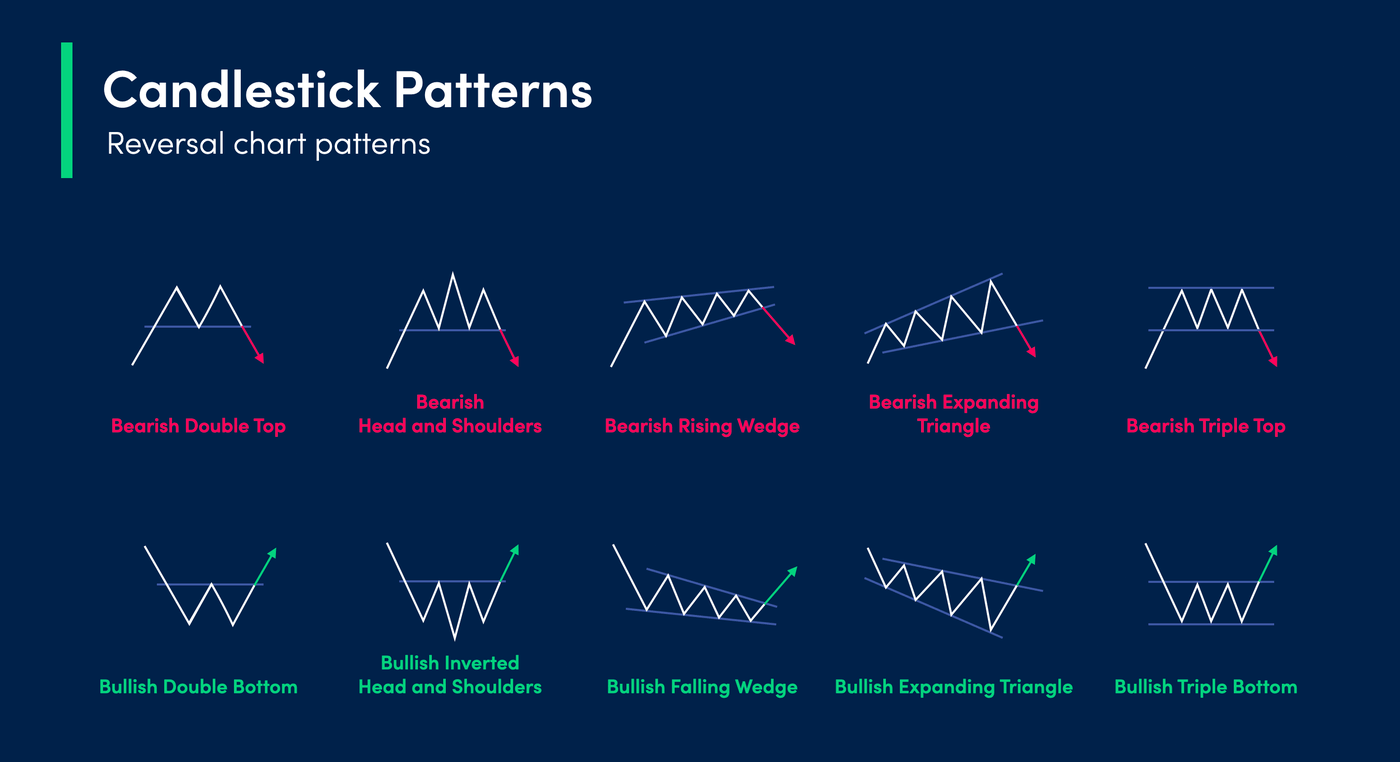
1. Identify the Trend: Look at a daily chart. Is price above or below the 200-MA? If above, you’re only looking for long (buy) trades. If below, you only consider short (sell) trades.
2. Entry Trigger: Wait for a pullback or a smaller moving average crossover (e.g., 50-MA crossing above 20-MA) that aligns with the 200-MA direction.
3. Example: Bitcoin is trading at $30,000 and the 200-MA is at $25,000. Price is above — bullish bias. You see a pullback to $28,500 with a bullish candlestick pattern. That’s your entry.
This keeps you from fighting the dominant trend. You’re not trying to pick tops or bottoms; you’re simply riding the wave.
Risk Management
No strategy works without managing risk. Here’s how to protect your capital:
- Stop Loss: Place your stop loss below the 200-MA itself or below a recent swing low (whichever is tighter). If the trend is truly strong, price should not violate this level.
- Position Size: Never risk more than 1-2% of your total account on a single trade. The 200-MA filter reduces false signals, but it’s not perfect.
- Re-evaluate on Breaks: If price closes decisively below the 200-MA (in a long setup), exit immediately. The trend has likely shifted.
Remember: The 200-MA is a lagging indicator. It won’t catch the very first move of a new trend, but it will keep you in the big moves and out of major drawdowns.
Conclusion
The 200-Day Moving Average trend filter is not a get-rich-quick scheme — it’s a disciplined framework. It forces you to trade with the market’s momentum instead of against it. Start by adding the 200-MA to your daily chart today. Let it be the voice that says, “Is this trade aligned with the big picture?” If the answer is no, walk away. If yes, you’ve just given yourself a massive edge. Trade smart, stay patient, and let the trend be your friend.
Mastering Supply and Demand Zones: The Trader’s Guide to High-Probability Entries
Have you ever watched a market reverse perfectly at a level you didn’t see coming? That’s the power of supply and demand zones. Unlike traditional support and resistance, which are single lines, zones represent areas where institutions are actively buying or selling. In this post, you’ll learn how to spot these zones and use them to catch big moves with confidence.
How It Works
Supply and demand zones are rooted in basic economics: when demand exceeds supply, price rises; when supply exceeds demand, price falls. In trading, a demand zone is a price area where buying pressure is so strong that it pushes price up. A supply zone is where selling pressure overwhelms buyers, causing price to drop. These zones form after sharp moves away from a consolidation area—think of them as the launchpad for a trend.
The Setup
To identify a zone, look for a strong, impulsive candle (or series of candles) that breaks out of a tight range. The base of that move—the consolidation before the breakout—is your zone. Mark it as a rectangle, not a line. For a demand zone, the base is below the breakout; for a supply zone, it’s above. Wait for price to return to that zone, then look for confirmation like a bullish or bearish engulfing candle before entering. The key is patience: let price come to you.
Risk Management
Every zone trade needs a plan. Place your stop loss just beyond the zone’s edge—if price breaks through, the zone is invalid. For a demand zone, set your stop below the base; for a supply zone, above it. Aim for a risk-to-reward ratio of at least 1:2. If the zone is strong, you might see price bounce multiple times, but never risk more than 1-2% of your account on a single trade. Remember, zones are areas of interest, not guarantees.
Conclusion
Supply and demand zones give you a clear, institutional edge. Start by marking them on a daily chart, then practice on lower timeframes. The more you observe, the better you’ll get at spotting high-probability setups. Trade smart, stay patient, and let the zones guide your decisions.
Mastering Supply and Demand Zones: The Trader’s Guide to High-Probability Entries
Have you ever watched a market reverse perfectly at a level you didn’t see coming? That’s the power of supply and demand zones. Unlike traditional support and resistance, which are single lines, zones represent areas where institutions are actively buying or selling. In this post, you’ll learn how to spot these zones and use them to catch big moves with confidence.
How It Works
Supply and demand zones are rooted in basic economics: when demand exceeds supply, price rises; when supply exceeds demand, price falls. In trading, a demand zone is a price area where buying pressure is so strong that it pushes price up. A supply zone is where selling pressure overwhelms buyers, causing price to drop. These zones form after sharp moves away from a consolidation area—think of them as the launchpad for a trend.
The Setup
To identify a zone, look for a strong, impulsive candle (or series of candles) that breaks out of a tight range. The base of that move—the consolidation before the breakout—is your zone. Mark it as a rectangle, not a line. For a demand zone, the base is below the breakout; for a supply zone, it’s above. Wait for price to return to that zone, then look for confirmation like a bullish or bearish engulfing candle before entering. The key is patience: let price come to you.
Risk Management
Every zone trade needs a plan. Place your stop loss just beyond the zone’s edge—if price breaks through, the zone is invalid. For a demand zone, set your stop below the base; for a supply zone, above it. Aim for a risk-to-reward ratio of at least 1:2. If the zone is strong, you might see price bounce multiple times, but never risk more than 1-2% of your account on a single trade. Remember, zones are areas of interest, not guarantees.
Conclusion
Supply and demand zones give you a clear, institutional edge. Start by marking them on a daily chart, then practice on lower timeframes. The more you observe, the better you’ll get at spotting high-probability setups. Trade smart, stay patient, and let the zones guide your decisions.
Unlocking the Future: How to Value DePIN Projects Like a Pro
Imagine a world where your smartphone, car, or even your home router earns you passive income. That’s the promise of Decentralized Physical Infrastructure Networks (DePIN). These projects incentivize people to contribute real-world resources—like storage, bandwidth, or sensor data—to a decentralized network. But here’s the million-dollar question: how do you value these projects? Unlike traditional tech stocks, DePIN tokens don’t have P/E ratios or balance sheets. Yet, understanding their valuation is the key to spotting the next 100x opportunity. In this guide, I’ll break down the simple, actionable metrics you need to evaluate DePIN projects like a seasoned pro.
The Strategy Explained
How it Works
DePIN valuation isn’t about guessing—it’s about measuring real-world utility. Think of a DePIN project as a two-sided marketplace: suppliers (those providing resources) and consumers (those paying for the service). The value of the token is tied to the network’s ability to attract and retain both sides. The core metric? Network Revenue. This is the total fees paid by consumers to use the infrastructure. If a project like Helium (for IoT) or Filecoin (for storage) generates millions in annual revenue, the token has a fundamental floor. Compare this to the token’s market cap to get a “Price-to-Sales” (P/S) ratio—a simpler, crypto-native version of traditional finance.
The Setup
To value a DePIN project, start by checking on-chain data dashboards (like Messari, TokenTerminal, or the project’s own explorer). Look for these three key numbers:
1. Annualized Network Revenue: Multiply the last 30 days of fees by 12.
2. Token Supply & Market Cap: Use CoinGecko or CoinMarketCap.
3. Resource Utilization: What percentage of the network’s capacity is being used? (e.g., storage filled, data transmitted).
Now, calculate the P/S Ratio: Market Cap ÷ Annualized Revenue. A ratio under 10 is often considered undervalued for a growing network; over 50 may indicate hype. For example, early Helium had a P/S under 5 before its massive run. Also, check the Revenue per Token: Total revenue divided by circulating supply. If this number is growing month-over-month, the token’s utility is increasing—a bullish sign.
Risk Management
DePIN is still a nascent sector, so risk management is crucial. Here are three rules:
- Don’t FOMO on Hype: A project with a low P/S but zero revenue growth is a trap. Always verify that the network has real users paying real fees.
- Watch for Token Dilution: DePIN projects often reward suppliers heavily with new tokens. High inflation can crush price even if revenue grows. Check the project’s emission schedule on its whitepaper.
- Diversify Across Verticals: Don’t put all your capital into one type of DePIN (e.g., storage). Spread across compute, wireless, and sensor networks to hedge against sector-specific risks.
Conclusion
Valuing DePIN projects doesn’t require a PhD in finance—just a focus on real-world data. By tracking network revenue, P/S ratios, and resource utilization, you can cut through the noise and identify projects with genuine traction. Remember, the best DePIN investments are those where the token’s price is backed by increasing utility, not just speculation. Start small, verify the numbers, and let the network’s growth compound your gains. The decentralized infrastructure revolution is just beginning—don’t get left behind.