
Bitcoin Price Drop Explained: What the $1,500 Sell-Off Means for Traders
Did you know Bitcoin’s price can swing by over $1,500 in less than sixty minutes? On April 27, 2026, that’s exactly what happened. After briefly touching nearly $79,500, Bitcoin plunged to $76,567, erasing over $20 billion from its total market value. For crypto traders watching their portfolios, understanding why these sudden drops occur and how geopolitical news drives market sentiment is essential knowledge. This guide breaks down the recent Bitcoin sell-off, explains the link between global events and crypto prices, and shows you how to interpret market movements without getting caught off guard. You’ll learn about liquidation mechanics, correlation patterns with traditional markets, and how to separate temporary volatility from lasting trends.
Read time: 10-12 minutes
Understanding Bitcoin Price Volatility for Beginners
Bitcoin price volatility refers to how quickly and dramatically the cryptocurrency’s value can change over short periods. Think of it like a rollercoaster that can climb high then drop fast—except this rollercoaster is influenced by global news, trader emotions, and automated trading systems. Unlike traditional stock markets that have built-in circuit breakers to pause trading during extreme moves, Bitcoin trades 24/7 across hundreds of exchanges worldwide.
Why does this volatility exist? Bitcoin’s market is still relatively young and smaller than traditional financial markets. A single large order from a whale (a trader holding massive amounts of BTC) can move prices significantly. Additionally, because many traders use leverage—borrowing money to amplify their bets—small price changes can trigger cascading liquidations that accelerate moves. As of April 2026, the total cryptocurrency market capitalization sits at roughly $1.54 trillion, which is still modest compared to the $50+ trillion U.S. stock market.
A real-world example? On April 27, news about Iran submitting a peace proposal initially pushed Bitcoin above $79,000 as traders anticipated reduced geopolitical risk. But when Western analysts noted the proposal avoided key nuclear issues, optimism faded fast, triggering a $1,500 drop in under one hour.
The Technical Details: How Market Liquidations Actually Work
When you hear terms like “$454 million in liquidations,” understanding the mechanics helps you grasp what’s really happening:
1. Leverage Positions: Traders can open “long” positions (betting price goes up) or “short” positions (betting price goes down) using borrowed funds. Common leverage ratios range from 2x to 100x, meaning a 1% price move can wipe out a 100x position.
2. Liquidation Price: Every leveraged position has a specific price at which the exchange automatically closes the trade to prevent losses exceeding the trader’s collateral. On Bitstamp, where this data originates, long positions get liquidated when prices fall below certain thresholds.
3. Cascade Effect: When one large position liquidates, that selling pressure pushes prices lower, triggering more liquidations. This creates a domino effect. On April 27, long liquidations totaled $284 million compared to just $59 million in shorts, confirming the selling pressure came from leveraged bulls being forced out.
4. Open Interest Reset: After mass liquidations, the total amount of open contracts decreases. Exchanges report this reset through metrics like “liquidations” which helps traders understand when excessive leverage has been flushed from the market.
Why this structure matters for you: Understanding liquidation mechanics helps you recognize that sharp drops aren’t always about fundamental news—sometimes they’re mechanical reactions to overleveraged markets. A helpful visual would be a flow diagram showing how a small price drop triggers a long liquidation, which adds selling pressure, which drops prices further.
Current Market Context: Why This Matters Now
As of late April 2026, Bitcoin’s price action tells a fascinating story about market correlations and geopolitical sensitivity. After weeks of tight correlation with global risk assets, Monday’s sell-off showed an interesting decoupling pattern.
Key market data:
- Bitcoin fell 1.7% in 24 hours, dropping from $79,490 to a low of $76,567
- Market capitalization declined from $1.56 trillion to $1.54 trillion
- Total crypto liquidations reached $454 million, with longs accounting for $284 million
While Bitcoin tumbled, European and U.S. stocks remained largely flat and range-bound. This decoupling suggests crypto traders were reacting specifically to geopolitical news rather than broader market sentiment. In contrast, Asian markets surged—South Korea’s Kospi index hit an all-time high above 6,600 for the first time in history.
The catalyst? Reports that Iran submitted a peace proposal to the Trump administration. However, Western commentators noted the offer sidesteps the core nuclear enrichment issues that sparked the conflict. Meanwhile, Brent crude oil climbed back above $100 per barrel, creating pressure to reopen the Strait of Hormuz—a waterway critical for global oil shipments.
Competitive Landscape: How Bitcoin’s Volatility Compares
Bitcoin isn’t the only asset experiencing volatility, but its behavior differs significantly from traditional markets:
| Feature | Bitcoin | U.S. Stocks (S&P 500) | Gold | Oil (Brent Crude) |
|---|---|---|---|---|
| Trading Hours | 24/7/365 | 6.5 hours/day, weekdays | 23 hours/day, weekdays | 23 hours/day, weekdays |
| Average Daily Move | 2-5% (recent weeks) | 0.5-1.5% | 0.5-1% | 1-3% |
| Leverage Availability | Up to 100x on some exchanges | 2x (via margin) or options | 10-20x via futures | 10-20x via futures |
| Liquidation Risk | High (automated liquidations) | Low (margin calls, no auto-liquidation) | Moderate | Moderate |
| Geopolitical Sensitivity | High (reacts rapidly to news) | Moderate (priced in more slowly) | High (safe haven status) | Very high (direct supply impact) |
Why this matters: Bitcoin’s 24/7 trading and high leverage availability means geopolitical news that breaks overnight can cause immediate, sharp moves before traditional markets have a chance to react. This creates both opportunity and risk for traders who understand the dynamics.
Practical Applications: Real-World Use Cases
Understanding Bitcoin’s price volatility isn’t just academic—it has concrete applications for crypto users:
- Risk Management for Active Traders: If you trade with leverage, set stop-loss orders below key support levels to limit losses during flash crashes. Following this drop, the $76,500 area could serve as a reference point for future trades.
- Portfolio Diversification: When Bitcoin decouples from stocks (as it did here), holding both assets can provide natural hedging. This event showed crypto doesn’t always move in lockstep with equities.
- News Monitoring Strategy: Subscribe to real-time geopolitical news feeds. The Iran peace proposal catalyst shows that macro events can matter more than crypto-specific news for price direction.
- Liquidation Data Analysis: Platforms like Coinglass track liquidation levels. Notice that $284 million in long liquidations triggered this drop—monitoring these levels helps predict potential price floors or ceilings.
- Market Sentiment Gauge: The Crypto Fear and Greed Index stood at 47 (Neutral) after this drop, up from 33 (Fear) the previous day. This recovery in sentiment despite the drop suggests traders see this as temporary noise rather than a trend reversal.
Risk Analysis: Expert Perspective
Primary Risks in Volatile Markets:
1. Liquidation Traps: When prices approach clusters of high-leverage positions, exchanges may experience temporary liquidity gaps, causing “slippage” where your stop-loss executes far below your intended price.
2. Geopolitical Whiplash: The Iran peace proposal story reversed quickly. Traders who bought the initial surge above $79,000 suffered immediate losses when the optimism faded hours later.
3. Correlation Shifts: Bitcoin’s decoupling from stocks this time could reverse just as quickly. Relying on historical correlation patterns can lead to false assumptions about portfolio hedging.
Mitigation Strategies:
- Position Sizing: Never risk more than 1-2% of your portfolio on a single trade. This limits damage during unexpected events.
- Use Wider Stop-Losses: In volatile markets, give your trades room to breathe. A 3-5% stop-loss is tighter than the average daily range.
- Monitor Oil Markets: Given the Strait of Hormuz connection, keep an eye on Brent crude prices. Oil above $100 suggests ongoing geopolitical tensions that could affect crypto.
- Dollar-Cost Averaging: For long-term holders, abrupt drops like this present buying opportunities rather than panic moments.
Expert Consensus: Most analysts view this as a short-term volatility event rather than the start of a prolonged downtrend. The rapid bounce from $76,567 shows buyers stepped in at lower levels. However, the Neutral Fear & Greed Index reading suggests the market remains cautious.
Beginner’s Corner: Quick Start Guide to Understanding Bitcoin Drops
If you’re new to crypto and wondering what to do when Bitcoin drops $1,500 in an hour, follow these steps:
1. Step 1: Don’t Panic Sell: The worst decisions often happen during emotional moments. If you’re a long-term holder, remember Bitcoin has survived dozens of 20%+ drops historically.
2. Step 2: Check the Reason: Open a crypto news aggregator to see if there’s a clear catalyst. In this case, the Iran peace proposal explains the move.
3. Step 3: Look at Liquidations: Visit Coinglass.com and check “Liquidation Map.” High long liquidations like today suggest the drop was mechanical, not fundamental.
4. Step 4: Compare to Traditional Markets: Check if stocks, gold, or oil moved similarly. If they didn’t, the drop is likely crypto-specific and may reverse faster.
5. Step 5: Review Your Own Risk: If you hold leveraged positions, consider reducing exposure until volatility settles. If you hold spot Bitcoin, nothing changes—you still own the same amount of BTC.
6. Step 6: Wait 24 Hours: Many sharp drops recover partially within a day. Make decisions after the initial volatility subsides.
Common Mistakes to Avoid:
- FOMO buying during the initial surge (above $79,000 was a trap this time)
- Setting stop-losses too tight in volatile conditions
- Assuming price will return to previous levels immediately
- Ignoring geopolitical context that may continue to drive moves
Future Outlook: What’s Next
Looking ahead, several factors will influence Bitcoin’s trajectory after this sharp sell-off:
1. Iran Proposal Developments: The Trump administration is reportedly reviewing the document. If negotiations progress, Bitcoin could recover toward $79,000+ as optimism returns. However, Western analysts note the nuclear issue remains unresolved, suggesting limited upside.
2. Oil Price Influence: With Brent crude above $100 per barrel, any resolution that reopens the Strait of Hormuz could drop oil below $90, providing consumer relief and potentially boosting risk assets including Bitcoin.
3. Decoupling Watch: Traders will monitor whether the stock-crypto correlation resumes or if Bitcoin continues its own path. The Asia outperformance suggests regional dynamics may differ from Western markets.
4. Leverage Reset: Today’s $454 million liquidation event has “cleaned” excessive long positions from the market. Historically, such resets often precede more sustainable moves in the opposite direction.
5. Regulatory Developments: Ongoing geopolitical tensions may accelerate regulatory frameworks as governments seek to understand crypto’s role in global finance.
Timeline: The immediate term (next 1-2 weeks) will focus on the Iran proposal. If no progress is made, Bitcoin may consolidate between $75,000 and $78,000. A breakthrough could push prices back toward $80,000 resistance. Medium-term (Q2-Q3 2026), the market will watch for clearer correlation patterns and the impact of ongoing Middle East tensions.
Key Takeaways
- Bitcoin’s $1,500 hourly drop was triggered by fading optimism around an Iranian peace proposal, demonstrating how geopolitical news can create rapid market moves.
- Market liquidations totaled $454 million, with long positions ($284 million) significantly outpacing shorts, confirming the selling was driven by forced closures of leveraged bullish bets.
- Crypto decoupled from U.S. and European stocks during this drop but aligned with Asian market surges, highlighting the importance of monitoring global regional differences.
- Understanding liquidation mechanics and stop-loss placement helps traders navigate volatile conditions without being caught in cascading sell-offs.
Consensys and Joe Lubin Commit 30,000 ETH to DeFi United Recovery
Apr 27, 2026 — Consensys and Ethereum co-founder Joe Lubin have joined the DeFi United recovery initiative, pledging up to 30,000 ETH to restore rsETH backing following a bridge incident on April 18. The commitment, announced Monday, adds major institutional support to the growing coalition now spanning over 14 ecosystem participants.
Immediate Details & Direct Quotes
Low fees are crucial when trading breaking news. We recommend MEXC for tight spreads and fast execution.
The contribution from Consensys and Lubin makes funds available immediately, bypassing standard governance timelines that could delay recovery efforts. DeFi United, launched on April 23 by Aave service providers, aims to make rsETH holders whole after the bridge incident created a gap in backing.
Stani Kulechov, founder of Aave Labs, acknowledged the contribution directly. “Financial support from these leading ecosystem participants makes funds available to the recovery effort without delay; the recovery would not be progressing as it is without them,” Kulechov remarked. “We’re grateful for this meaningful contribution towards the goal of making rsETH holders whole and normalizing market conditions.”
The participant list includes Aave DAO, Lido, Etherfi, Ethena, Mantle, Ink Foundation, Tydro, Golem Foundation, Golem Project, and Frax. Individual contributors such as Stani Kulechov and Emilio Frangella are also listed alongside institutional backers. BGD Labs and thousands of DeFi community members have reportedly committed as well.
Market Context & Reaction
Lubin framed the moment as a test of Ethereum’s collective resilience. “The Ethereum technology and ecosystem are antifragile,” he stated in the release shared with Bitcoin.com News. “Ethereum will continue to adapt and evolve to scale and broaden its scope, while continuing to harden the foundations.”
“The Ethereum ecosystem has always been at its best when it moves together,” Lubin continued. “DeFi United is exactly that — a broad, coordinated response to protect users and strengthen the infrastructure we’ve all helped build. Consensys is proud to contribute alongside other stewards in the ecosystem.”
Nasdaq-listed Sharplink (ticker: SBET) has joined in an advisory capacity to help structure the recovery plan. The company brings strategic planning expertise as the coalition works across funding, governance, and technical pathways simultaneously.
Background & Historical Context
The April 18 bridge incident created a significant gap in rsETH backing, triggering the need for a coordinated response across the DeFi ecosystem. Rather than relying on a single protocol or governance body, DeFi United pooled capital and expertise from across the Ethereum ecosystem to address the shortfall.
Governance approval processes at affected protocols are running in parallel with the recovery efforts. The 30,000 ETH commitment from Consensys and Lubin accelerates recovery by making capital available now, giving governance processes room to operate without holding up progress.
The coalition reflects the breadth of the Ethereum ecosystem — liquid staking protocols, stablecoin projects, layer-2 networks, and individual contributors are all participating in the recovery push.
What This Means
The immediate impact is accelerated timeline for rsETH backing restoration, with major capital commitments allowing recovery to advance on multiple fronts at once. Further funding updates are expected at defiunited.world as governance processes continue moving forward.
Longer-term implications point to strengthened infrastructure resilience across DeFi protocols. The coordinated response demonstrates the ecosystem’s ability to self-correct and protect users when incidents occur.
Individual contributors and community members can monitor progress through DeFi United’s official channels. Governance votes at affected protocols will determine additional funding and recovery mechanisms in the coming weeks.
—
MiCA Stablecoin Rules Explained: Why Euro Tokens Lag Behind USD Peers
Did you know that euro-backed stablecoins handle less than 1% of global stablecoin volume, despite the euro being one of the world’s most traded currencies? This surprising gap lies at the heart of a new report from Blockchain for Europe, which argues that the European Union’s Markets in Crypto-Assets Regulation (MiCA) has created euro stablecoins that are ultra-safe—but commercially uncompetitive. In a market where US dollar-pegged tokens dominate digital payments and trading, Europe’s cautious approach may be holding back its own digital currency ecosystem. For crypto users and investors, understanding this regulatory trade-off is essential for navigating the stablecoin landscape in 2026. This guide explains how MiCA works, why euro stablecoins struggle to compete, and what these rules mean for your crypto strategy.
Read time: 10-12 minutes
Understanding Stablecoin Regulation for Beginners
Stablecoins are cryptocurrencies designed to maintain a stable value, typically pegged 1:1 to a fiat currency like the US dollar or euro. Think of them as digital versions of cash—you can send them anywhere in the world instantly, but their value stays predictable.
Why were they created? Traditional cryptocurrencies like Bitcoin can be volatile, making them impractical for everyday transactions or as a store of value. Stablecoins solve this problem by combining the speed and borderless nature of blockchain with the stability of traditional money.
A real-world example: When you want to move $1,000 from a US exchange to a European platform, you could use a stablecoin like USDC or USDT. The transaction settles in minutes rather than days, and the value doesn’t fluctuate during the transfer. This makes stablecoins essential for trading, lending, and cross-border payments in the crypto ecosystem.
MiCA (Markets in Crypto-Assets Regulation) is the EU’s comprehensive framework for regulating cryptocurrencies. For stablecoins, MiCA creates two categories: e-money tokens (EMTs) , which are pegged to a single fiat currency like the euro, and asset-referenced tokens (ARTs) , which are backed by multiple assets. The rules governing EMTs are particularly strict—and that’s where the controversy begins.
The Technical Details: How MiCA Affects Euro Stablecoins
MiCA’s rules for euro-denominated stablecoins (EMTs) include several key requirements that shape their competitiveness:
1. Full Backing Requirement: Every euro stablecoin in circulation must be fully backed by reserves held in separate accounts. This means for every 1 EURT (a hypothetical euro stablecoin) in existence, there must be 1 euro held in a regulated bank account or equivalent safe asset.
2. Interest Ban: MiCA explicitly prohibits EMTs from paying interest to holders. This rule was designed to prevent stablecoins from becoming unregulated deposit substitutes that could compete with traditional bank accounts.
3. Redemption Rights: Holders must have the legal right to redeem their stablecoins for fiat currency at any time, at par value, without additional fees.
4. Reserve Requirements: Issuers must maintain prudent liquidity standards and face strict reporting obligations to European regulators.
How these rules interact: The combination creates a paradox. The full backing and redemption rights make euro stablecoins extremely safe—your tokens are always redeemable at face value. However, the interest ban puts them at a “particular disadvantage in a positive-rate environment,” according to the report’s authors. When central bank interest rates are high (as they have been recently), bank deposits earn interest while stablecoins cannot. This creates a massive incentive for users to hold dollars or euros in banks rather than in stablecoin form.
Why this structure matters: For users, this means euro stablecoins are reliable but offer no yield. For issuers, it’s difficult to build a profitable business model without the ability to share interest income. The result? Low adoption and limited market presence.
Current Market Context: Why This Matters Now
As of April 2026, the stablecoin market tells a stark story. According to data from DeFiLlama cited in the Blockchain for Europe report, euro-denominated stablecoins account for less than 1% of global stablecoin volume. This is despite the euro being the second most traded currency globally, representing roughly 20-30% of foreign exchange reserves and international payments.
In contrast, US dollar-pegged stablecoins like Tether (USDT) and USD Coin (USDC) dominate the market with over 90% share. These dollar stablecoins have found ways to distribute yield through various mechanisms—some operate offshore, others use repurchase agreements or money market funds to generate returns for holders.
The report, drafted by European Central Bank official Ulrich Bindseil and Blockchain for Europe’s Erwin Voloder, argues that MiCA has pushed euro stablecoins onto the “downward-sloping” part of a regulatory Laffer curve. In economics, the Laffer curve suggests there’s an optimal level of regulation—too little creates risk, but too much stifles activity. The authors argue that MiCA’s strict rules exceed this optimum, reducing the very market activity they aim to govern.
The timing is critical. With the European Central Bank maintaining positive interest rates, the gap between zero-yield euro stablecoins and interest-bearing bank deposits has never been wider. Meanwhile, dollar stablecoins continue to grow, cementing the US dollar’s dominance in digital finance.
Competitive Landscape: How Euro Stablecoins Compare
Here’s how euro stablecoins stack up against their US dollar counterparts and other options:
| Feature | Euro Stablecoins (MiCA-Compliant) | US Dollar Stablecoins (USDT/USDC) | Bank Deposits (Euro) |
|---|---|---|---|
| Yield Potential | None (legally prohibited) | Can offer yield through various mechanisms | Interest-bearing (2-4% currently) |
| Regulatory Oversight | Strict EU supervision | Varies by jurisdiction (some offshore) | Highly regulated |
| Safety | Ultra-safe (fully backed, audited) | Varies by issuer (some reserves opaque) | Deposit insurance up to €100,000 |
| Global Adoption | Very low (<1% market share) | Dominant (>90% market share) | N/A (traditional banking) |
| Transaction Speed | Fast (blockchain) | Fast (blockchain) | Slow (1-3 business days) |
| Redemption Guarantee | Legal right to redeem at par | Varies by issuer | Yes (within regulatory limits) |
Why this matters for users: If you’re a European crypto user, you face a choice. Using euro stablecoins means accepting zero yield in exchange for regulatory safety. Using dollar stablecoins offers more functionality but introduces currency exchange risk and potentially less regulatory protection. Traditional bank deposits offer yield and safety but lack the speed and programmability of blockchain-based assets.
Practical Applications: Real-World Use Cases
Despite their limitations, euro stablecoins have specific use cases worth knowing:
- Regulatory Compliance for EU Businesses: Companies operating within the EU may prefer euro stablecoins to avoid currency exchange costs and ensure compliance with local regulations. For example, a German crypto exchange might use euro stablecoins for internal settlements to avoid USD exposure.
- Hedging Against Currency Volatility: European traders who want exposure to crypto markets without taking on USD risk can use euro stablecoins as a safe haven during market turbulence.
- Cross-Border Payments Within Europe: Sending value across EU borders using euro stablecoins can be faster and cheaper than traditional bank transfers, though the lack of yield makes them less attractive for holding.
- On-Ramp for European Users: New crypto users in the EU may find it easier to buy euro stablecoins directly from local exchanges, avoiding the step of converting euros to dollars first.
- Yield Farming (With Caution): While euro stablecoins themselves pay no interest, they can still be used in DeFi protocols that offer returns through lending or liquidity provision. However, this introduces smart contract risk and the returns may not justify the complexity.
Risk Analysis: Expert Perspective
Primary Risks:
1. Competitive Disadvantage: The interest ban creates a structural barrier to adoption. In a rising rate environment, euro stablecoins become increasingly unattractive compared to bank deposits or dollar stablecoins that can offer yield.
2. Market Marginalization: With less than 1% market share, euro stablecoins risk becoming irrelevant. Low liquidity means wider spreads and worse execution for users who need to trade them.
3. Regulatory Arbitrage: Users may simply use dollar stablecoins instead, bypassing EU regulations entirely. This undermines MiCA’s goal of consumer protection while failing to boost European digital finance.
Mitigation Strategies:
- Regulatory Reform: The report suggests that MiCA may need amendments to allow some form of yield distribution, similar to how money market funds operate under EU law.
- Layer 2 Solutions: Euro stablecoins could be used within DeFi protocols on layer 2 networks, where additional yield opportunities may exist without violating MiCA’s core rules.
- Hybrid Approaches: Some issuers might explore “synthetic” euro instruments that combine stablecoin features with other financial products to create yield without violating the interest ban.
Expert Consensus: The report’s authors acknowledge that MiCA’s safety provisions are valuable for consumer protection. However, they argue that the framework needs “recalibration” to strike a better balance between safety and competitiveness. European regulators face a delicate choice: maintain strict rules that protect users but limit growth, or relax restrictions to foster innovation while managing new risks.
Future Outlook: What’s Next
The future of euro stablecoins depends on regulatory and market developments in the coming months and years:
1. MiCA Review Process: MiCA includes provisions for periodic review and amendment. The Blockchain for Europe report may influence this process, potentially leading to proposals that allow limited yield distribution or other competitive adjustments.
2. European Digital Euro: The European Central Bank continues developing a central bank digital currency (CBDC), which could either compete with or complement private euro stablecoins. A digital euro would offer the safety of central bank money with potential programmability features.
3. Market Adaptation: Some issuers may find creative workarounds within MiCA’s framework. For instance, stablecoin-backed lending products that generate returns through DeFi protocols could offer users yield while technically not paying interest on the stablecoin itself.
4. International Coordination: As other jurisdictions (US, UK, Asia) finalize their crypto regulations, the EU may adjust MiCA to maintain a level playing field for European digital asset businesses.
The debate over euro stablecoins illustrates a fundamental tension in crypto regulation: how to protect users without stifling innovation. The answer will shape not just the future of stablecoins in Europe, but the continent’s role in the global digital economy.
Key Takeaways
- MiCA’s strict rules make euro stablecoins ultra-safe but uncompetitive, with less than 1% of global stablecoin volume despite the euro’s economic importance.
- The interest ban puts euro stablecoins at a disadvantage in positive-rate environments, making bank deposits more attractive than holding digital euros.
- US dollar stablecoins dominate the market because they can offer yield through mechanisms that MiCA prohibits for euro tokens.
- Regulatory reform may be needed to balance consumer protection with the competitiveness of European digital finance.
- For users, euro stablecoins offer safety but limited utility; consider your specific needs for yield, currency exposure, and regulatory compliance when choosing stablecoins.
Top RWA Projects to Watch in 2026: Tokenized Real-World Assets
Real World Assets (RWAs) are tangible or intangible assets—such as real estate, bonds, commodities, and private credit—that are tokenized on a blockchain. By bridging the gap between Traditional Finance (TradFi) and Decentralized Finance (DeFi), RWAs enable fractional ownership, 24/7 liquidity, and transparent on-chain verification. In 2026, the RWA sector is expected to mature significantly, driven by institutional adoption and regulatory clarity. This guide highlights the top projects to watch, explains how tokenization works, and provides a balanced investment analysis.
What Are Real World Assets (RWAs)?
RWAs represent off-chain assets that are brought on-chain via tokenization. The key difference between off-chain and on-chain assets lies in accessibility and liquidity. Off-chain assets (e.g., a physical building or a corporate bond) are illiquid, require intermediaries, and have high minimum investment thresholds. On-chain RWAs, by contrast, are divisible, tradeable 24/7, and can be used as collateral in DeFi protocols. This transformation unlocks new capital efficiency for investors and issuers alike.
How RWA Tokenization Works
The technical process involves several steps:
- Asset Identification & Valuation: An asset (e.g., a commercial real estate property) is appraised by a third-party auditor.
- Special Purpose Vehicle (SPV): A legal entity (SPV) is created to hold the asset, ensuring legal separation from the issuer.
- Tokenization: The SPV issues digital tokens on a blockchain (e.g., Ethereum, Polygon) that represent fractional ownership of the asset.
- Oracle Integration: Oracles (e.g., Chainlink) provide real-time price feeds and off-chain data to the smart contract, ensuring accurate valuation and compliance.
- On-Chain Distribution: Tokens are distributed to investors via regulated platforms or decentralized exchanges, enabling secondary trading.
Top RWA Projects to Watch in 2026
1. Ondo Finance
Ondo Finance tokenizes U.S. Treasury bonds and money market funds, offering institutional-grade yields to DeFi users. With partnerships with BlackRock and Morgan Stanley, Ondo is a leader in the regulated RWA space. Data from RWA.xyz shows Ondo’s total value locked (TVL) exceeding $500 million in early 2026.
2. Centrifuge
Centrifuge focuses on tokenizing private credit and real-world invoices. Its Tinlake protocol allows investors to earn yield from asset-backed loans. Centrifuge has integrated with MakerDAO, enabling DAI borrowing against RWA collateral.
3. RealT
RealT tokenizes U.S. residential real estate, allowing investors to buy fractional ownership of rental properties. Investors earn rental income in stablecoins, and tokens can be traded on secondary markets. RealT has over 1,000 properties tokenized as of 2026.
4. Maple Finance
Maple Finance provides undercollateralized lending for institutional borrowers, using RWAs as collateral. Its pools are managed by experienced delegates, and the platform has processed over $2 billion in loans. Maple is expanding into real estate and trade finance.
5. Goldfinch
Goldfinch offers decentralized credit for real-world businesses, particularly in emerging markets. By using a “trust through consensus” model, it avoids over-collateralization. Goldfinch has funded over $100 million in loans to fintechs and SMEs.
Investment Analysis: Pros, Cons, and Risks
Pros:
- Fractional ownership lowers barriers to entry for high-value assets.
- 24/7 liquidity and global accessibility.
- Transparent on-chain records reduce fraud and administrative costs.
- Potential for higher yields compared to traditional fixed-income products.
Cons:
- Regulatory uncertainty across jurisdictions can affect token legality.
- Smart contract risk: bugs or exploits could lead to loss of funds.
- Oracle dependency: inaccurate price feeds can cause liquidation or mispricing.
- Illiquidity in secondary markets for niche assets.
Key Risks:
- Regulation: Securities laws may classify RWA tokens as securities, requiring compliance with KYC/AML rules.
- Smart Contract Risk: Code vulnerabilities can be exploited; audits are essential but not foolproof.
- Counterparty Risk: The SPV or asset manager may default or mismanage the underlying asset.
For a broader market view, check out our analysis on The Fibonacci Trap: Why Your Perfect Retracement Entry Keeps Failing. Investors often compare this to Mastering Supply and Demand Zones: The Trader’s Guide to High-Probability Entries.
Tool Recommendation: Where to Start
If you are ready to explore RWA investments, Binance offers a robust platform for trading tokenized assets and earning yields. Binance supports many top RWA tokens and provides educational resources for beginners. Create an account on Binance to start your RWA journey.
Frequently Asked Questions (FAQ)
Are RWA tokens considered securities?
In many jurisdictions, RWA tokens that represent ownership of an underlying asset are classified as securities. This means they must comply with securities regulations, including registration, KYC, and AML requirements. Always consult a legal expert before investing.
How do I earn yield from RWA projects?
Yield can be earned through rental income (e.g., RealT), interest payments (e.g., Centrifuge, Maple Finance), or by providing liquidity on decentralized exchanges. Yields vary based on the asset class and platform fees.
What is the minimum investment for RWA tokens?
Minimum investments vary widely. Some platforms allow purchases for as little as $10 (e.g., RealT), while others require a minimum of $1,000 or more for institutional-grade products. Fractional ownership makes RWAs accessible to retail investors.
Conclusion
RWA tokenization is poised to transform how we invest in traditional assets, offering unprecedented liquidity, transparency, and accessibility. The top projects in 2026—Ondo Finance, Centrifuge, RealT, Maple Finance, and Goldfinch—are leading the charge with strong fundamentals and institutional backing. However, investors must remain vigilant about regulatory, smart contract, and counterparty risks. As the ecosystem matures, RWAs could become a cornerstone of diversified portfolios. Start small, do your own research, and consider using a trusted platform like Binance to begin your journey.
What Is Impermanent Loss? Liquidity Providing Explained
Impermanent loss is one of the most misunderstood risks in decentralized finance (DeFi). If you provide liquidity to automated market maker (AMM) pools like Uniswap, PancakeSwap, or SushiSwap, you are exposed to impermanent loss. This guide explains what it is, how it works, and how to minimize its impact.
Key Concepts
What is impermanent loss? Impermanent loss occurs when the price of tokens in a liquidity pool changes compared to when you deposited them. The larger the price change, the more severe the loss. It is called “impermanent” because the loss only becomes permanent if you withdraw your liquidity while the price is still different from your deposit price. If the price returns to the original level, the loss disappears.
How does it happen? AMMs use a constant product formula (x * y = k) to maintain a balanced pool. When external prices change, arbitrageurs trade against the pool to bring it back in line, causing your share of the pool to shift toward the token that has decreased in value. This results in a loss compared to simply holding the tokens.
Example: You deposit $1,000 of Token A and $1,000 of Token B into a 50/50 pool. If Token A doubles in price, arbitrageurs will buy Token A from the pool until the pool’s ratio matches the external price. When you withdraw, you will have less Token A and more Token B than you started with. The total value may be less than if you had just held both tokens.
When is it most severe? Impermanent loss is most severe in volatile pairs (e.g., ETH/USDC) and in pools with large price swings. Stablecoin pairs (e.g., USDC/USDT) have minimal impermanent loss because prices stay close to each other.
Pro Tips
- Choose stablecoin pairs if you want to avoid impermanent loss entirely.
- Provide liquidity in pools with high trading fees to offset potential losses.
- Use concentrated liquidity (e.g., Uniswap V3) to narrow your price range and reduce exposure.
- Monitor your positions regularly and withdraw if price moves significantly away from your deposit price.
- Consider yield farming strategies that include impermanent loss protection (e.g., Bancor, or some insurance protocols).
FAQ Section
Is impermanent loss really permanent?
No. It only becomes permanent if you withdraw your liquidity while the price ratio is different from when you deposited. If you wait for the price to return to the original ratio, the loss disappears.
Can I avoid impermanent loss completely?
Only by providing liquidity to stablecoin pairs (e.g., USDC/USDT) or by using single-sided liquidity protocols. All other AMM pools carry some degree of impermanent loss risk.
How do I calculate impermanent loss?
Use an impermanent loss calculator (many are available online). The formula depends on the price change ratio. For a 2x price change, impermanent loss is about 5.7%; for a 3x change, about 13.4%.
Does impermanent loss affect all liquidity providers equally?
Yes, all LPs in the same pool experience the same percentage of impermanent loss relative to their deposit. However, the absolute dollar impact depends on the size of your position.
What is the best strategy to minimize impermanent loss?
Provide liquidity in stablecoin pairs, use concentrated liquidity with a narrow range, or choose pools with high trading volume and fees that can offset the loss. Also, consider using impermanent loss insurance or hedging strategies.
Conclusion
Impermanent loss is a key risk for any liquidity provider in DeFi. Understanding how it works allows you to make informed decisions about which pools to join and when to exit. While it cannot be eliminated entirely (except in stablecoin pairs), you can manage it through careful pair selection, fee analysis, and active position monitoring. For more details on this, check out our guide on Beyond the Hype: How to Value DePIN Projects Like a Pro. You might also be interested in reading about EU Crypto Firms Face July 1 Shutdown as MiCA Deadlines Already Passed.
Institutional Stablecoin Settlement Explained: A Guide to Banking Circle’s Regulated Launch
Did you know that stablecoins now settle billions of dollars in transactions daily, and a regulated bank just got the green light to expand its role in this market? Luxembourg-licensed Banking Circle has launched institutional stablecoin settlement services after securing regulatory approval. This matters because it bridges traditional banking with the crypto economy under clear European rules. This guide explains how regulated stablecoin settlement works, why it’s different from unregulated alternatives, and what it means for institutional investors and everyday crypto users in 2025. You’ll learn about MiCA compliance, the key stablecoins involved, and how this development signals broader adoption of digital assets by traditional finance.
Read time: 10-12 minutes
Understanding Stablecoin Settlement for Beginners
Stablecoin settlement is the process of using stablecoins—digital tokens designed to maintain a stable value, usually pegged to a fiat currency like the U.S. dollar or euro—to complete financial transactions between institutions. Think of it like using a digital gift card instead of cash. The gift card always represents a specific dollar amount, making it easy to use for payments without worrying about price fluctuations. Similarly, stablecoins offer the speed and programmability of cryptocurrencies while maintaining price stability.
Why was this created? Traditional bank transfers can take days to settle, especially across borders. Stablecoins enable near-instant settlement, 24/7, without relying on traditional banking hours or intermediary correspondent banks. For institutions moving large sums, this reduces costs and counterparty risk.
A real-world example: A payment firm needs to send €10 million to a partner in another country. Instead of waiting 2-3 days for a SWIFT transfer, they can convert euros to a euro-pegged stablecoin, send it instantly, and the recipient converts back to fiat. This process, done through a regulated bank like Banking Circle, adds security and compliance oversight.
The Technical Details: How Regulated Stablecoin Settlement Actually Works
A regulated stablecoin settlement system involves several key components working together:
1. Regulatory Licensing: The service provider must obtain authorization from financial regulators. Banking Circle secured a Crypto Asset Service Provider (CASP) registration from Luxembourg’s financial regulator on April 15, 2025. This license permits regulated conversion between fiat currencies and stablecoins for institutional clients.
2. Supported Stablecoins: Banking Circle currently supports three stablecoins:
– USDC (issued by Circle) – a U.S. dollar-pegged stablecoin
– USDG (issued by Paxos) – also U.S. dollar-pegged
– EURI (issued by Banking Circle itself) – a euro-pegged token first launched in August 2024
3. Conversion Mechanism: Institutions can convert fiat currency (euros, dollars) into stablecoins at the bank. These tokens then move on blockchain networks to counterparties. The counterparty can hold the stablecoins or convert them back to fiat through the same regulated channel.
4. Settlement Infrastructure: Banking Circle’s existing payment system, which processes over €1.5 trillion ($1.7 trillion) annually for more than 750 payment firms, financial institutions, and marketplaces, integrates stablecoin functionality alongside traditional rails.
Why this structure matters: Regulation ensures anti-money laundering (AML) compliance, customer protection, and reserve backing—addressing key concerns about unregulated stablecoins. For institutions, this makes stablecoins usable within existing compliance frameworks.
Flow diagram suggestion: “Regulated Fiat-to-Stablecoin Settlement Process” showing: Fiat → Bank → Stablecoin minting → Blockchain transfer → Counterparty → Fiat conversion
Current Market Context: Why This Matters Now
As of late 2025, the stablecoin market has matured significantly, with total market capitalization exceeding $200 billion. The European Union’s Markets in Crypto-Assets Regulation (MiCA) , which came into full effect earlier this year, has created a clear regulatory framework for stablecoins, known as Electronic Money Tokens (EMTs) and Asset-Referenced Tokens (ARTs) .
Banking Circle’s expansion is a direct response to MiCA. The bank’s EURI token was among the first euro stablecoins designed to comply with MiCA rules, which require:
- Full reserve backing (1:1 with fiat currency)
- Regular audits and reporting
- Redemption rights for holders
- Issuer authorization within the EU
This regulatory clarity has sparked a race among traditional banks and crypto firms to launch compliant stablecoin services. Banking Circle now joins a growing list of institutions offering regulated digital euro solutions, positioning itself as a key player in European digital payments infrastructure.
The timing is significant because institutions increasingly demand stablecoins that meet regulatory standards. CASP approval gives Banking Circle credibility that unregulated issuers lack.
Competitive Landscape: How Key Players Compare
The euro stablecoin market is becoming increasingly competitive. Here’s how major players stack up:
| Feature | Banking Circle (EURI) | Société Générale (EURCV) | Qivalis Consortium |
|---|---|---|---|
| Issuer Type | Licensed bank | French bank (SG-FORGE) | Bank consortium (12 banks) |
| Regulatory Status | MiCA-compliant (Luxembourg CASP) | MiCA-compliant (French PSAN) | MiCA-compliant (planned) |
| Launch Date | August 2024 (EURI) | April 2023 (EURCV) | Planned H2 2026 |
| Blockchain Support | Not specified | Ethereum + multichain | Fireblocks custody planned |
| Primary Focus | Institutional settlement | Retail & institutional | Cross-bank collaboration |
| Key Advantage | Existing payment infrastructure (€1.5T volume) | First-mover, MetaMask integration | Broad consortium backing (BBVA, BNP Paribas, UniCredit, etc.) |
Key Differentiators:
- Banking Circle leverages its existing payment network serving 750+ clients
- Société Générale (SG-FORGE) has integrated USDCV (its dollar token) into MetaMask, reaching retail users
- Qivalis represents unprecedented bank cooperation, including ING, UniCredit, CaixaBank, BBVA, BNP Paribas, and DZ Bank
Why this matters for users: More regulated euro stablecoins mean greater choice, better liquidity, and lower fees for euro-denominated crypto transactions. It also signals that traditional banking is embracing digital assets rather than resisting them.
Practical Applications: Real-World Use Cases
- Cross-Border Payments for Businesses: Companies can fund international transfers using stablecoins and settle in either fiat or stablecoins, avoiding traditional banking delays. Coinbase’s partnership with Nium extends this to 190+ countries.
- Institutional Treasury Management: Firms holding euro reserves can earn yield or make instant payments using EURI, maintaining euro exposure while gaining crypto efficiency.
- Exchange Settlement: Crypto exchanges and payment processors can settle balances with each other using stablecoins, reducing counterparty risk and settlement time from T+2 to near-instant.
- DeFi Integration (with caution): Regulated stablecoins like EURI can potentially be used in decentralized finance protocols, though institutional investors often prefer to stay within regulated custody.
- Remittance Corridors: Workers sending money to eurozone countries could use stablecoins to reduce fees compared to traditional remittance services.
Risk Analysis: Expert Perspective
Primary Risks:
1. Regulatory Risk: While MiCA provides clarity, it’s untested in crisis scenarios. Future amendments could change requirements for stablecoin reserves or redemption rights.
2. Technical Risk: Smart contract vulnerabilities or blockchain network congestion could delay settlements or lock funds.
3. Market Risk: In extreme scenarios, stablecoins could lose their peg (de-peg), creating losses for holders. While regulated issuers must maintain reserves, market stress could still cause temporary deviations.
4. Concentration Risk: Reliance on a single bank or issuer introduces counterparty risk, though Banking Circle’s existing infrastructure is robust.
Mitigation Strategies:
- Diversification: Use multiple regulated stablecoin issuers (USDC, EURI, EURCV) rather than concentrating with one.
- Audits and Transparency: Choose issuers that publish regular reserve attestations from reputable auditors.
- Redemption Guarantees: Regulated stablecoins must offer redemption rights; understand the mechanics before transacting.
- Cold Storage Infrastructure: For long-term holdings, use institutional-grade custody solutions.
Expert Consensus: Regulated stablecoin settlement through licensed banks represents a significant step forward in institutional crypto adoption. However, the market is still developing, and risks remain—particularly around liquidity during market stress.
Beginner’s Corner: Quick Start Guide
1. Understand Your Needs: Determine whether you need stablecoins for payments, trading, or long-term holding. Different use cases require different stablecoins and providers.
2. Research Regulated Options: Focus on stablecoins issued by regulated entities (banks with CASP/PSAN licenses) rather than unregulated alternatives.
3. Verify Reserve Backing: Check that the issuer provides regular attestation reports showing full fiat reserve backing.
4. Compare Fees: Evaluate conversion costs, withdrawal fees, and network fees for each stablecoin. Banking Circle serves institutions; retail users may find different options.
5. Test Small First: Before moving significant funds, test the conversion and settlement process with a small amount to understand the mechanics.
6. Use Secure Wallets: For institutional users, this means qualified custody solutions. For retail, hardware wallets or reputable exchanges.
7. Monitor Regulatory Changes: MiCA is still being implemented. Stay informed about updates that could affect stablecoin usage in your jurisdiction.
Common Mistakes to Avoid:
- Using unregulated stablecoins for large institutional transactions
- Ignoring jurisdiction-specific regulatory requirements
- Assuming all “euro stablecoins” are interchangeable (check issuer, backing, and compliance)
Future Outlook: What’s Next
The euro stablecoin market is expected to grow significantly. Key developments to watch:
1. Qivalis Launch (Planned H2 2026): The 12-bank consortium aims to create a widely adopted euro stablecoin for interbank settlement, potentially dominating the institutional market.
2. Circle Payments Network Expansion: Circle’s managed settlement service for banks could create a global stablecoin payment network integrated with traditional finance.
3. MiCA Phase 2: The EU may introduce additional rules for decentralized finance (DeFi) and non-euro stablecoins, further shaping the regulatory landscape.
4. Banking Circle’s Growth: With CASP approval and its existing payment infrastructure, expect broader services—potentially including retail-facing stablecoin products.
Speculation boundary: While euro stablecoins are set to grow, it remains unclear whether they will replace fiat payments or serve primarily as a bridge between traditional and crypto finance. Institutional adoption is accelerating, but mainstream consumer usage may take longer.
Key Takeaways
- Regulated stablecoin settlement is now available from a Luxembourg-licensed bank, enabling institutions to convert fiat to stablecoins under EU MiCA rules.
- Banking Circle supports USDC, USDG, and its own EURI stablecoin, with existing payment infrastructure processing €1.5 trillion annually for 750+ clients.
- This launch positions Banking Circle in a competitive euro stablecoin market alongside Société Générale (EURCV) and the Qivalis bank consortium.
- MiCA regulation provides clarity and security for stablecoin users, requiring full reserves, regular audits, and redemption rights.
- Institutional adoption of stablecoins is accelerating, driven by demand for faster, cheaper settlement and clear regulatory frameworks.
,
“datePublished”: “2025-04-26T10:00:00.000-04:00”,
“dateModified”: “2025-04-27T09:52:01.631-04:00”,
“mainEntity”: {
“@type”: “Thing”,
“name”: “Regulated Stablecoin Settlement”
}
}

The Revenge Trade Trap: How to Stop Letting Losses Control Your Portfolio
You just lost money on a trade. Maybe it was a bad entry, a sudden reversal, or simply bad luck. Now, instead of stepping back, you feel a burning urge to get it back — immediately. You double your position size, ignore your rules, and click the buy button with clenched teeth. Welcome to the psychology of revenge trading.
Revenge trading is one of the most common and dangerous emotional traps in crypto. It turns a small loss into a catastrophic one. But the good news? It’s completely avoidable once you understand the psychology behind it and build a system to protect yourself.
How It Works: The Emotional Loop
Revenge trading follows a predictable cycle:
1. Loss occurs – A trade goes against you, triggering frustration or anger.
2. Rationality fades – Your ego steps in, demanding immediate recovery.
3. Impulsive trade – You enter a trade without proper analysis, often with a larger position size.
4. Further loss – The market doesn’t care about your emotions. The trade fails again, amplifying the pain.
5. Repeat – The cycle deepens as you try to “win back” what you lost.

This loop is driven by a psychological bias called loss aversion — the feeling that a loss hurts twice as much as a gain feels good. Your brain wants to erase the pain right now, even if it means breaking your strategy.
The Setup: Recognizing the Urge
The first step to stopping revenge trading is recognizing when you’re about to fall into it. Watch for these warning signs:
- Your heart rate increases after a loss.
- You find yourself checking the charts obsessively minutes after a losing trade.
- You think, “I need to make that back on the next trade.”
- You ignore your stop-loss or move it to avoid taking a loss.
- You size up to “win back” the loss faster.
If any of these sound familiar, you’re in the revenge trading danger zone. The best action? Step away from the screen.
How to Break the Cycle
Here are three practical strategies to replace revenge trading with disciplined trading:
1. The 30-Minute Rule
After any losing trade, force yourself to wait at least 30 minutes before entering another position. Use that time to go for a walk, drink water, or journal your feelings. This breaks the emotional loop and lets your rational brain catch up.
2. Pre-Defined Loss Limits
Before you start trading, set a daily loss limit — a fixed amount of money or percentage of your account you’re willing to lose in one day. Once you hit that limit, you’re done for the day. No exceptions. This prevents a single loss from snowballing into a disaster.
3. Focus on Process, Not P&L
Shift your mindset from “making money” to “executing a good trade.” A well-planned trade that hits your stop-loss is still a good trade if you followed your rules. The outcome is out of your control; your process is not.
Risk Management: Your Safety Net
Revenge trading thrives when you have no risk management. Here’s how to build a fortress around your account:
- Never risk more than 1-2% of your account on a single trade. This keeps losses small and emotionally manageable.
- Use stop-losses on every trade — and never move them further away out of revenge.
- Keep a trading journal where you note your emotional state before and after each trade. Over time, you’ll spot patterns.
- Have a “cool down” rule — for example, after three consecutive losses, take the rest of the day off.
Remember: The market will always be there tomorrow. Missing one trade is far better than blowing up your account because of one emotional decision.
Conclusion
Revenge trading is a psychological trap that catches every trader at some point. The key is not to avoid losses (they’re inevitable) but to control your reaction to them. By recognizing the warning signs, enforcing time-outs, and sticking to strict risk management, you can turn revenge into patience — and patience into profits.
Trade smart, stay disciplined, and remember: the best trade is sometimes the one you don’t take.
MiCA Rules Make Euro Stablecoins Safe But Uncompetitive, Report Finds
April 27, 2026 — A new report from Blockchain for Europe argues that the European Union’s Markets in Crypto-Assets Regulation (MiCA) has created euro-denominated stablecoins that are ultra-safe but commercially weak, leaving the bloc far behind US dollar-pegged tokens in digital payments and trading. The report, released Monday, cites DeFiLlama data showing euro stablecoins account for less than 1% of global stablecoin volume despite the euro’s much larger role in global markets.
Immediate Details & Direct Quotes
Ready to act on this news? Open an account on Binance — the world’s largest crypto exchange.
The report, drafted by European Central Bank official Ulrich Bindseil and Blockchain for Europe’s Erwin Voloder, focuses on MiCA’s rules for euro electronic money tokens (EMTs). These tokens must be fully backed and are barred from paying interest. The remuneration ban was designed to prevent stablecoins from becoming deposit substitutes, but the authors say it leaves MiCA-compliant euro tokens “at a particular disadvantage” in a positive-rate environment.
“This combination of strict safeguards and zero interest has created a safe but structurally uncompetitive euro stablecoin segment,” the report states. The authors argue that MiCA has pushed euro stablecoins onto the “downward-sloping” part of a regulatory “Laffer” curve, where stricter rules reduce the activity they are meant to govern.
Market Context & Reaction
As of Monday’s report release, euro stablecoins face significant competitive disadvantages versus bank deposits and foreign currency stablecoins that can embed or distribute yield through other mechanisms. The report places these constraints in a broader policy debate over how MiCA compares with other jurisdictions and how Europe should respond.
The euro’s minimal stablecoin market share stands in stark contrast to the dominance of US dollar-pegged tokens, which continue to lead global digital payments and trading volumes. The report’s findings come as regulators worldwide grapple with balancing consumer protection against market competitiveness.
Background & Historical Context
MiCA, the European Union’s flagship crypto regulation framework, was designed to provide legal clarity and consumer protections for digital asset markets. The rules for EMTs specifically require full backing of reserves and prohibit interest payments to prevent stablecoins from functioning as deposit substitutes.
The Blockchain for Europe report represents a significant industry pushback against certain MiCA provisions. The authors argue that while safety is important, overly restrictive rules can backfire by driving activity to less regulated jurisdictions or alternative instruments. The report explicitly calls for reforming MiCA to address these competitive imbalances.
What This Means
In the short term, euro stablecoin issuers will likely continue struggling to gain traction against their US dollar-pegged counterparts. The report suggests that without regulatory reform, the euro may remain a minor player in the stablecoin market despite its economic heft.
For European crypto traders and businesses, the current framework means limited options for euro-denominated digital payments and trading pairs. The report signals growing pressure on EU policymakers to revisit MiCA’s interest ban and other restrictive provisions.
Long-term implications include potential competitive disadvantages for European blockchain projects and fintech companies if they cannot offer yield-bearing euro stablecoins. The report’s authors urge Europe to consider reforms that maintain safety while restoring competitiveness, noting that other jurisdictions are moving ahead with more flexible stablecoin regulations.

The Golden Cross: Your First Step to Riding Major Crypto Trends
Imagine looking at a price chart and seeing two simple lines cross. It might not look like much at first, but in the world of trading, that moment can signal the start of a powerful uptrend. Welcome to the Golden Cross — one of the most well-known and respected signals in technical analysis.
If you’re new to crypto trading, this is a strategy you need to understand. It’s simple, reliable, and has helped traders catch some of the biggest bull runs in Bitcoin and altcoin history.
How It Works
The Golden Cross occurs when a short-term moving average crosses above a long-term moving average. The most common setup uses the 50-day moving average (MA) crossing above the 200-day moving average (MA).
- 50-day MA = Short-term momentum (price action over ~2 months)
- 200-day MA = Long-term trend (price action over ~8 months)
When the short-term line rises above the long-term line, it tells us that recent price strength is outpacing the broader trend. In other words, buyers are stepping in, and the market is gaining upward momentum.
The Setup
To trade the Golden Cross, follow these steps:
1. Pick your asset – Bitcoin, Ethereum, or any coin with decent liquidity and history.

2. Add the 50 and 200 MAs to your chart (most exchanges like Binance or TradingView have these built-in).
3. Wait for the cross – The 50 MA must cross above the 200 MA.
4. Confirm with volume – A Golden Cross is stronger when accompanied by rising trading volume. This shows genuine buying pressure.
5. Enter the trade – Once confirmed, you can open a long position.
Pro tip: Don’t jump in the second the lines touch. Wait for a daily or weekly close above the cross to avoid fakeouts.
Risk Management
Even a Golden Cross can fail. Markets can reverse, and fake signals happen. Here’s how to protect yourself:
- Set a stop-loss – Place it just below the 200-day MA or the recent swing low. This limits your loss if the trend turns.
- Position size – Never risk more than 1-2% of your total portfolio on a single trade.
- Take partial profits – Consider selling 50% at a key resistance level, then let the rest ride with a trailing stop.
- Watch for the Death Cross – If the 50 MA crosses back below the 200 MA, exit immediately. That’s the bearish opposite signal.
Remember: The Golden Cross is a trend-following tool, not a crystal ball. It works best in strong trending markets, not choppy sideways action.
Conclusion
The Moving Average Golden Cross is a classic strategy for a reason. It’s easy to spot, rooted in simple math, and has a proven track record in crypto. Whether you’re catching a Bitcoin rally or an altcoin breakout, this signal can help you enter with confidence.
Start by practicing on a demo chart. Look for past Golden Crosses on Bitcoin’s history — you’ll see how often they marked the beginning of major uptrends. Over time, you’ll develop an eye for the setup and learn to combine it with other indicators like RSI or MACD for even better results.
Happy trading, and remember: trend is your friend.
Mastering the Markets: A Beginner’s Guide to Japanese Candlestick Patterns
If you’ve ever glanced at a crypto or stock chart and felt overwhelmed by the zigzagging lines, you’re not alone. But what if I told you that hidden inside those price movements is a story—a story told through simple shapes called candlesticks? Japanese candlestick patterns have been used for centuries to predict market sentiment, and once you learn to read them, you’ll start seeing opportunities everywhere.
How It Works
Candlesticks were developed by Japanese rice traders in the 18th century. Each “candle” shows four key pieces of data: the open, high, low, and close price for a given time period. The body (the thick part) represents the range between open and close. If the close is higher than the open, the body is usually green or white (bullish). If the close is lower, it’s red or black (bearish). The thin lines above and below the body are the “wicks” or “shadows,” showing the highest and lowest prices during that period.
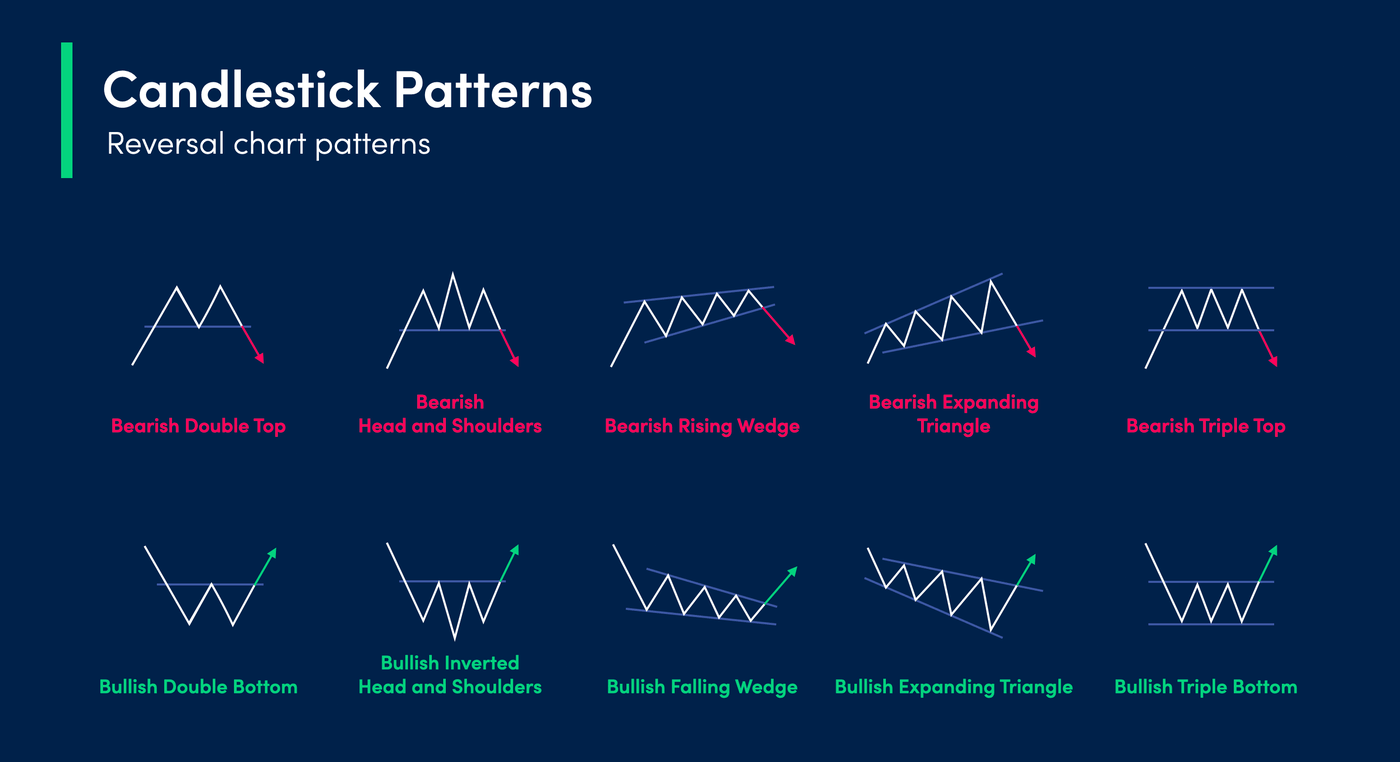
But the real magic happens when you look at patterns formed by multiple candles. These patterns reveal whether buyers or sellers are in control, and whether a trend might reverse or continue.
The Setup
Let’s break down three essential patterns you can start using today:
1. The Hammer (Bullish Reversal)
- What it looks like: A small body at the top of the candle with a long lower wick (at least twice the body length). No upper wick or a very short one.
- What it means: Sellers pushed the price down during the session, but buyers stepped in and drove it back up to near the open. This shows strong buying pressure after a downtrend, hinting at a reversal.
- How to trade: Wait for confirmation—a green candle closing above the hammer’s body. Enter long with a stop loss below the hammer’s low.
2. The Shooting Star (Bearish Reversal)
- What it looks like: A small body at the bottom of the candle with a long upper wick (at least twice the body length). Little to no lower wick.
- What it means: Buyers pushed the price up early, but sellers overwhelmed them and forced the price back down to near the open. This appears after an uptrend and signals potential bearish reversal.
- How to trade: Wait for a red candle closing below the shooting star’s body. Enter short with a stop loss above the star’s high.
3. The Engulfing Pattern (Strong Reversal)
- What it looks like: Two candles. The second candle’s body completely “engulfs” the first candle’s body. In a bullish engulfing, the second candle is green and engulfs a red candle. In a bearish engulfing, the second candle is red and engulfs a green candle.
- What it means: A sudden shift in momentum. For bullish engulfing, buyers overpowered sellers after a downtrend. For bearish engulfing, sellers took control after an uptrend.
- How to trade: Enter on the close of the second candle. Place a stop loss below the low (for bullish) or above the high (for bearish) of the engulfing candle.
Risk Management
Candlestick patterns are powerful, but they’re not magic. Always combine them with other tools like support/resistance levels, volume, or trend lines. Never risk more than 1-2% of your trading capital on a single trade. Use stop losses religiously. And remember: patterns work best on higher timeframes (1-hour, 4-hour, daily) where noise is reduced. Practice on a demo account first to build confidence without risking real money.
Conclusion
Japanese candlestick patterns give you a window into the battle between buyers and sellers. By learning to read these simple formations, you can spot potential reversals and continuations before they happen. Start with the Hammer, Shooting Star, and Engulfing patterns—they’re reliable and easy to spot. As you gain experience, you’ll develop an intuitive feel for market psychology. Happy trading, and remember: every candle tells a story. Listen closely.