
Cold Storage vs Hot Wallets: Which Should You Choose?
When it comes to securing your cryptocurrency, the choice between cold storage and hot wallets is one of the most critical decisions you’ll make. Whether you’re a long-term HODLer or an active trader, understanding the trade-offs between security and convenience is essential. In this guide, we break down the key differences, pros and cons, and help you decide which solution fits your needs.
Key Concepts
Hot Wallets are cryptocurrency wallets connected to the internet. They include mobile apps, browser extensions, and exchange wallets. They offer quick access for trading and spending but are more vulnerable to hacks and malware.
Cold Storage refers to offline wallets, such as hardware wallets (e.g., Ledger, Trezor) or paper wallets. They are not connected to the internet, making them immune to online attacks. Cold storage is ideal for long-term holdings and large amounts of crypto.
Hybrid Approach: Many users combine both — using a hot wallet for daily transactions and a cold wallet for savings. This balances security with convenience.
Pro Tips
- Never store large amounts in a hot wallet. Only keep what you need for active trading or spending.
- Always back up your seed phrase for both hot and cold wallets. Store it offline in a safe place.
- Use a hardware wallet from a reputable brand and buy directly from the manufacturer to avoid tampered devices.
- Enable two-factor authentication (2FA) on all exchange accounts and hot wallets.
- Test small transactions first when moving funds between wallets to ensure addresses are correct.
FAQ Section
What is the safest way to store crypto?
Cold storage (hardware wallet) is the safest option for long-term storage. For active use, a hot wallet with strong security practices (2FA, updated software) is acceptable.
Can I use both cold storage and a hot wallet?
Yes, this is a common strategy. Use a hot wallet for small, frequent transactions and a cold wallet for your main holdings.
Are exchange wallets considered hot wallets?
Yes, exchange wallets are hot wallets because they are connected to the internet. They are convenient but carry higher risk if the exchange is hacked.
Do I need a hardware wallet for small amounts?
For small amounts (e.g., under $500), a well-secured hot wallet may be sufficient. For larger sums, a hardware wallet is strongly recommended.
Conclusion
Choosing between cold storage and hot wallets depends on your trading style and security needs. Hot wallets offer speed and convenience for active traders, while cold storage provides unmatched security for long-term investors. A hybrid approach often gives you the best of both worlds.
For more details on this, check out our guide on Mastering Supply and Demand Zones: The Trader’s Guide to High-Probability Entries.
You might also be interested in reading about Altcoin Rally Explained: Why SOL, LINK, and SUI Are Outperforming Bitcoin.
Carbon Credits: How Tokenization Is Fixing the Market
Carbon credits have long been hailed as a key mechanism to offset greenhouse gas emissions, yet the market has been plagued by opacity, double-counting, and illiquidity. Tokenization—the process of representing real-world assets (RWAs) on a blockchain—is now emerging as a powerful solution to these problems. By bridging the gap between Traditional Finance (TradFi) and Decentralized Finance (DeFi), tokenized carbon credits offer verifiable provenance, fractional ownership, and 24/7 liquidity. This guide explains how the technology works, evaluates the investment case, and provides actionable insights for both institutional and retail participants.
Off-Chain vs. On-Chain: The Core Difference
Traditional carbon credits exist off-chain as certificates issued by registries such as Verra or Gold Standard. Buyers must trust intermediaries for verification, and trading is slow, expensive, and limited to large players. On-chain tokenization transforms these credits into digital tokens that live on a blockchain. Each token represents a verified carbon credit (e.g., 1 ton of CO₂ avoided or removed). Smart contracts enforce rules, oracles feed real-world data (such as audit reports), and the blockchain provides an immutable ledger of ownership and retirement. This shift dramatically reduces fraud, enables peer-to-peer trading, and opens the market to smaller investors.
How Tokenization Works: The Technical Process
The journey from a physical carbon offset project to a tradable token involves several key steps:
- Project Verification: A carbon project (e.g., reforestation, renewable energy) is certified by a recognized registry like Verra or Gold Standard. The registry issues a unique serial number for each credit.
- Special Purpose Vehicle (SPV): An SPV is created to legally hold the off-chain carbon credits. This entity isolates the asset and provides a legal bridge to the blockchain.
- Tokenization: The SPV mints a corresponding number of tokens on a blockchain (often Ethereum, Polygon, or a private chain). Each token is backed 1:1 by a specific carbon credit held in the SPV.
- Oracle Integration: Oracles (e.g., Chainlink) continuously verify that the off-chain credits remain valid and have not been retired elsewhere. This prevents double-counting.
- On-Chain Trading: Tokens are listed on decentralized exchanges (DEXs) or specialized RWA platforms. Investors can buy, sell, or retire tokens directly on-chain. Retirement permanently removes the token from circulation, ensuring the environmental benefit is claimed only once.
Investment Analysis: Pros, Cons, and Risks
Pros
- Transparency: Every transaction and retirement is recorded on a public ledger, reducing fraud and greenwashing.
- Liquidity: Tokenization enables fractional ownership and 24/7 trading, attracting a broader investor base. Data from RWA.xyz shows that tokenized carbon credit volumes have grown over 500% year-over-year.
- Accessibility: Retail investors can now participate with small amounts, whereas traditional markets require large minimums.
- Programmability: Smart contracts can automate retirement, compliance, and even create carbon-backed stablecoins.
Cons & Risks
- Regulatory Uncertainty: Carbon credits are not yet uniformly classified as securities or commodities. Jurisdictions like the EU and US are still drafting rules. Changes could affect token legality or tax treatment.
- Smart Contract Risk: Bugs in token contracts or oracles could lead to loss of funds or incorrect data feeds. Audits are essential but not foolproof.
- Quality Variability: Not all carbon credits are equal. Some projects have been criticized for overestimating emissions reductions. Tokenization does not automatically solve project quality—due diligence on the underlying project remains critical.
- Market Volatility: Prices of carbon credits can fluctuate significantly based on policy changes, demand from corporates, and macroeconomic factors.
For a broader market view, check out our analysis on Onchain Privacy and Accountability: How They Can Coexist, Explained. Investors often compare this to Top RWA Projects to Watch in 2026.
Tool Recommendation: Getting Started Safely
If you are new to tokenized carbon credits, the safest way to begin is through a regulated, user-friendly exchange. Binance offers a dedicated RWA section where you can buy, sell, and retire tokenized carbon credits with high liquidity and robust security. You can practice this setup safely on Binance. Create your account here and explore the carbon credit market with confidence.
FAQ Section
Q: Are tokenized carbon credits legal?
A: In most jurisdictions, yes, as long as the underlying credits are legally issued by a recognized registry. However, securities laws may apply depending on the token structure. Always consult a legal advisor before investing.
Q: How do I know a tokenized carbon credit is real?
A: Reputable projects use oracles to verify the status of off-chain credits and publish audit reports. Look for tokens that are backed by Verra or Gold Standard credits and have been audited by a third party.
Q: Can I retire a tokenized carbon credit to offset my emissions?
A: Yes. Most platforms allow you to permanently retire tokens on-chain. This action is recorded immutably, and you receive a certificate that can be used for ESG reporting.
Conclusion
Tokenization is not a cure-all, but it addresses the most critical failures of the carbon credit market: lack of transparency, illiquidity, and high barriers to entry. By leveraging blockchain technology, investors can now access a more efficient, trustworthy, and inclusive market. However, due diligence on project quality and regulatory developments remains essential. For those willing to navigate the risks, tokenized carbon credits represent a compelling intersection of environmental impact and financial innovation.
Trump Media Reports $406M Q1 Loss on Bitcoin, CRO Holdings Write-Downs
May 9, 2026 — Trump Media & Technology Group posted a $405.9 million first-quarter net loss, driven primarily by $244 million in unrealized losses on its cryptocurrency holdings and a $108.2 million investment loss tied to equity securities. The parent company of Truth Social generated just $871,200 in revenue during the period, widening its loss sharply from $31.7 million a year earlier.
Immediate Details & Direct Quotes
Looking for altcoin opportunities and smooth trading? Try KuCoin.
The company disclosed in a Securities and Exchange Commission filing that its cryptocurrency portfolio took significant marks against market value. Trump Media held 9,542.16 bitcoin as of March 31, carrying a cost basis of $1.13 billion but a fair value of $647.1 million at quarter-end. That bitcoin position is now worth approximately $770 million.
The firm also held 756.1 million Cronos (CRO) tokens with a cost basis of $113.9 million and a fair value of just $53 million. Trump Media closed the purchase of $105 million in CRO last year as part of a Crypto.com deal linking the token to Truth Social and Truth+ rewards programs.
Revenue rose modestly to $871,200 from $821,200 a year earlier. Media revenue accounted for $810,100, while Truth.Fi generated $61,100 in management fees tied to ETF offerings.
Market Context & Reaction
Trump Media reported $17.9 million in operating cash flow for the quarter, supported by the sale of previously purchased put options on pledged bitcoin and bitcoin-related securities. The firm raised $2.5 billion for a bitcoin treasury strategy last year and disclosed a $2 billion bitcoin stack in July.
A significant portion of the company’s bitcoin remains locked up. Trump Media confirmed that 4,260.73 BTC, valued at $289 million at quarter-end, serves as collateral for convertible notes. The company also holds covered call options on 4,000 BTC with a counterparty to hedge against cryptocurrency volatility. Those options require 2,000 BTC to be held as collateral with the counterparty.
As of the March reporting date, Trump Media’s total crypto holdings included 9,542.16 bitcoin and 756.1 million CRO tokens.
Background & Historical Context
The widening loss marks a significant shift from Trump Media’s position a year ago, when the company reported a $31.7 million first-quarter net loss before its aggressive crypto treasury strategy began. The company launched its bitcoin accumulation program last year, raising $2.5 billion specifically for cryptocurrency purchases.
The CRO position stems from a strategic partnership with Crypto.com that integrated the Cronos token into Truth Social’s rewards ecosystem. The $105 million purchase closed in 2025, tying the token directly to user engagement on the platform.
The company’s bitcoin holdings are structured with collateral arrangements, including convertible note backing and hedging positions through covered call options, indicating a complex treasury management approach.
What This Means
Trump Media’s substantial unrealized losses highlight the volatility risk inherent in corporate crypto treasury strategies, particularly for companies with limited operating revenue. The $244 million unrealized loss on crypto holdings represents a significant drag on financial results that could continue fluctuating with market prices.
The company’s ability to generate $17.9 million in operating cash flow despite the overall loss suggests active management of its crypto derivatives positions. Future quarters will likely see continued sensitivity to bitcoin and CRO price movements given the size of these holdings relative to the company’s revenue base.
Investors and market observers should monitor Trump Media’s upcoming filings for updates on its bitcoin collateral arrangements and any changes to its crypto hedging strategy. The company’s reliance on cryptocurrency gains to offset operating losses remains a key risk factor.
—
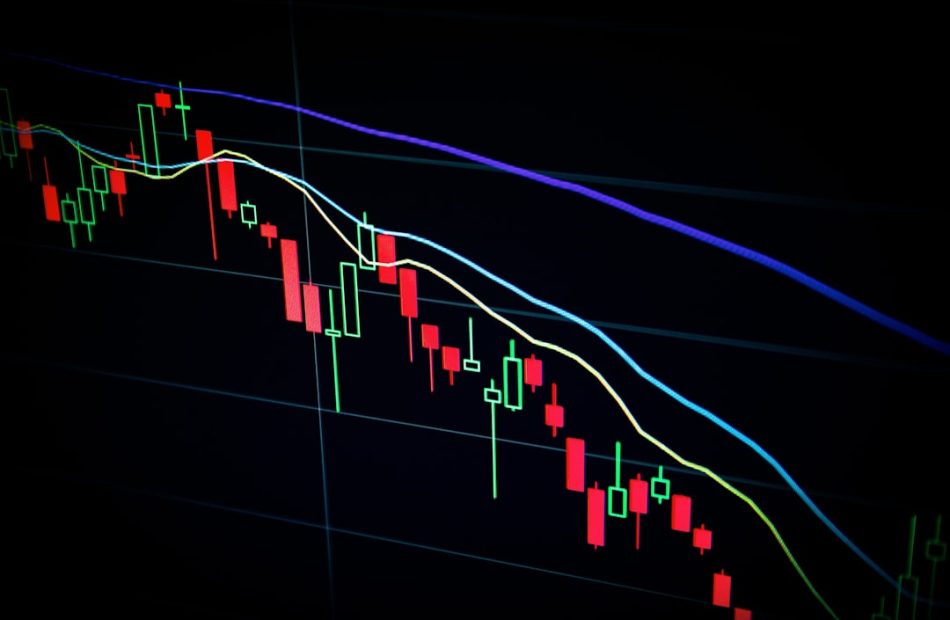
The Secret Power Move: How Support and Resistance Flips Can Supercharge Your Trading
Have you ever watched a price level that was acting as a rock-solid floor suddenly turn into a ceiling? Or vice versa? That’s not a glitch in the matrix. It’s one of the most powerful concepts in technical analysis: the Support and Resistance Flip.
Understanding this flip is like learning a secret handshake in the trading world. It tells you that the market sentiment has shifted, and the big money is now defending a level from the opposite side. Let’s break down how you can spot these flips and use them to your advantage.
How It Works
At its core, a support and resistance flip is a role reversal. A level that previously acted as support (where buying pressure stopped the price from falling) becomes resistance (where selling pressure stops the price from rising). The same thing happens in reverse: old resistance becomes new support.
This happens because of a change in the behavior of traders at that price level:
- The Breakout: Price breaks decisively through a known support or resistance level.
- The Retest: Price returns to that same level.
- The Flip: Traders who missed the breakout now see the level as a new opportunity. Bulls who were trapped at a broken support level now sell to break even, adding selling pressure. This collective action confirms the flip.
The Setup
Here’s a simple, repeatable setup to trade a support and resistance flip:
1. Identify a Key Level: Look for a horizontal level on the chart where price has bounced off multiple times (at least 2-3 touches). This is your zone of interest.

2. Wait for a Breakout: Watch for a strong, decisive candle (or series of candles) to close clearly above a resistance level or below a support level. The more volume, the better.
3. Let It Breathe: Don’t jump in immediately. Let the price move away from the level. This gives the market time to “reset.”
4. Enter on the Retest: Wait for price to come back to the broken level from the other side. For example, if resistance broke to the upside, wait for price to fall back down to that old resistance level.
5. Look for Confirmation: Don’t just enter blindly. Wait for a rejection candle (like a hammer or a bearish engulfing pattern) at the level. This confirms the flip is happening.
6. Place Your Trade: Enter a long position if the level flipped from resistance to support. Enter a short position if the level flipped from support to resistance.
Risk Management
Even the most beautiful flip setup can fail. Here’s how to protect yourself:
- Stop Loss: Place your stop loss just beyond the flip level. For a long trade, put it a few ticks below the old resistance (now support). For a short trade, put it a few ticks above the old support (now resistance). If the flip fails, you want out quickly.
- Take Profit: Aim for the next major support or resistance level. A common technique is to target a risk-reward ratio of at least 1:2 or 1:3.
- Position Size: Never risk more than 1-2% of your trading capital on a single setup. The flip is powerful, but it’s not magic.
Conclusion
The support and resistance flip is a beautiful example of market psychology in action. It shows you where the smart money is repositioning. By waiting for the retest and confirmation, you’re not chasing the breakout; you’re waiting for the market to prove itself.
Start by identifying these levels on a higher timeframe (like the 1-hour or 4-hour chart). Practice spotting the flips in a demo account. Once you see the power of this simple concept, you’ll never look at a chart the same way again.
Happy trading!
KYC vs No-KYC Exchanges: Privacy Guide 2026
Introduction
In 2026, the debate between KYC (Know Your Customer) and no-KYC cryptocurrency exchanges has never been more critical. As global regulators tighten their grip on digital assets, traders face a fundamental choice: convenience and compliance versus privacy and anonymity. This comprehensive guide breaks down the differences, risks, and benefits of each approach, helping you navigate the evolving landscape of crypto trading while protecting your personal data.
Key Concepts
KYC Exchanges require users to submit government-issued identification, proof of address, and sometimes even facial verification. Examples include Coinbase, Binance, and Kraken. These platforms offer higher liquidity, fiat on-ramps, and regulatory protection, but at the cost of personal data exposure.
No-KYC Exchanges allow trading without identity verification. Decentralized exchanges (DEXs) like Uniswap and PancakeSwap, as well as some centralized platforms like KuCoin (for certain tiers), fall into this category. They prioritize privacy but may have lower liquidity, limited fiat support, and higher regulatory risk.
Hybrid Models are emerging in 2026, where platforms offer both KYC and no-KYC options depending on trading volume or asset type. This flexibility aims to balance compliance with user privacy.
Pro Tips
- Assess your threat model: If you value privacy above all, use no-KYC DEXs with a VPN and non-custodial wallet. If you need fiat on-ramps or institutional features, choose a reputable KYC exchange.
- Check jurisdiction: Some countries ban no-KYC exchanges entirely. Always verify local laws before trading.
- Use privacy coins: Monero (XMR) or Zcash (ZEC) can add an extra layer of anonymity when trading on no-KYC platforms.
- Enable 2FA: Whether KYC or no-KYC, always secure your accounts with two-factor authentication.
- Diversify: Consider using both types of exchanges for different purposes—KYC for fiat entry and large trades, no-KYC for smaller, private transactions.
💡 Pro Tip
Looking for altcoin opportunities and smooth trading? Try KuCoin.
FAQ Section
1. Is it legal to use no-KYC exchanges in 2026?
It depends on your country. In jurisdictions like the US, UK, and EU, no-KYC exchanges face increasing scrutiny, but using them is not always illegal. Always check local regulations.
2. Are no-KYC exchanges safe from hacks?
Not necessarily. DEXs can have smart contract vulnerabilities, while centralized no-KYC platforms may lack insurance. Always research a platform’s security history.
3. Can I convert fiat to crypto on no-KYC exchanges?
Most no-KYC exchanges do not support direct fiat on-ramps. You may need to buy crypto on a KYC exchange first, then transfer it to a no-KYC platform.
4. What happens if a no-KYC exchange gets shut down?
Your funds could be at risk. Always withdraw to a private wallet you control, and never leave large amounts on any exchange.
5. Do KYC exchanges share my data with governments?
Yes, in many cases. KYC exchanges are required to comply with anti-money laundering (AML) laws and may share data with regulators upon request.
Conclusion
Choosing between KYC and no-KYC exchanges in 2026 is a personal decision that hinges on your privacy needs, trading volume, and risk tolerance. While KYC platforms offer stability and compliance, no-KYC exchanges provide unmatched privacy and censorship resistance. The smartest approach is to use both strategically—leverage KYC exchanges for fiat entry and large trades, and no-KYC platforms for private, smaller transactions. For more details on this, check out our guide on What Is Impermanent Loss? Liquidity Providing Explained. You might also be interested in reading about Cryptoquant Warns Bitcoin’s April Rally Mirrors 2022 Bear Market Pattern.
What is Impermanent Loss? Liquidity Providing Explained
Impermanent loss is one of the most critical risks for anyone providing liquidity to automated market maker (AMM) decentralized exchanges like Uniswap, SushiSwap, or PancakeSwap. It occurs when the price of tokens in a liquidity pool changes compared to when you deposited them, leading to a temporary loss in value relative to simply holding the tokens. Understanding impermanent loss is essential for DeFi participants who want to earn fees without being caught off guard by market volatility.
Key Concepts
How Liquidity Pools Work
Liquidity pools are smart contracts that hold reserves of two tokens (e.g., ETH and USDC). Liquidity providers (LPs) deposit an equal value of both tokens to facilitate trading. In return, they earn a portion of the trading fees generated by the pool. The pool uses a constant product formula (x * y = k) to maintain balance, meaning that as one token is bought, its price rises relative to the other.
What Causes Impermanent Loss?
Impermanent loss happens when the price ratio of the two tokens changes after you deposit. For example, if you deposit 1 ETH and 1000 USDC (when ETH = $1000), and ETH later doubles to $2000, arbitrage traders will buy ETH from the pool until the ratio adjusts. You will end up with less ETH and more USDC than you started with. If you withdraw at that point, the total value is less than if you had simply held 1 ETH and 1000 USDC. The loss is called “impermanent” because it can disappear if the prices return to the original ratio.
Calculating Impermanent Loss
The magnitude of impermanent loss depends on the price change. For a 2x price change, the loss is about 5.7%; for a 3x change, it’s about 13.4%; for a 4x change, about 20%; and for a 10x change, about 50%. The formula is: IL = (2 * sqrt(price ratio)) / (1 + price ratio) – 1. The loss is realized only when you withdraw your liquidity.
Pro Tips
- Choose stablecoin pairs: Pools like USDC/DAI have minimal price divergence, so impermanent loss is negligible.
- Look for high fee pools: Pools with higher trading volume and fees can offset impermanent loss over time.
- Monitor volatility: Avoid providing liquidity to highly volatile token pairs unless you are compensated with high fees or incentives.
- Use impermanent loss calculators: Tools like the one on DailyDefi.org can help you estimate potential losses before depositing.
- Consider concentrated liquidity: On platforms like Uniswap v3, you can set price ranges to earn higher fees but also face higher risk if prices exit your range.
💡 Pro Tip
Looking for altcoin opportunities and smooth trading? Try KuCoin.
FAQ Section
Is impermanent loss permanent?
No, it is only realized when you withdraw your liquidity. If prices return to the original ratio, the loss disappears. However, if you withdraw during a price divergence, the loss becomes permanent.
Can impermanent loss be avoided?
It cannot be fully avoided in volatile pairs, but it can be minimized by choosing stablecoin pairs, using single-sided liquidity platforms, or providing liquidity only when you expect low volatility.
How do trading fees offset impermanent loss?
Every trade in the pool generates fees that are distributed to LPs. If the cumulative fees exceed the impermanent loss, you still come out ahead. High-volume pools with low volatility are ideal.
What is the difference between impermanent loss and divergence loss?
They are the same concept. Impermanent loss is the term popularized by Uniswap, while divergence loss is used more broadly in DeFi literature.
Conclusion
Impermanent loss is a key risk that every liquidity provider must understand. While it can eat into your returns, it is not a dealbreaker if you choose the right pools, monitor market conditions, and factor in trading fees. By staying informed and using tools like impermanent loss calculators, you can make smarter decisions in DeFi. For more details on this, check out our guide on The Rise of AI Agents in Crypto: A Complete Guide. You might also be interested in reading about Tax Loss Harvesting in Crypto: A Guide for Traders.
US Treasury Bills on Blockchain: The Risk-Free Rate On-Chain
US Treasury Bills (T-Bills) are short-term debt obligations issued by the U.S. government, traditionally considered the closest proxy to a ‘risk-free’ asset in global finance. Now, through tokenization, these instruments are being brought onto blockchain networks, allowing investors to access the risk-free rate with 24/7 liquidity, fractional ownership, and on-chain transparency. This guide explains how T-Bills work on-chain, the investment opportunities and risks, and how you can participate.
What Are US Treasury Bills On-Chain?
Tokenized US Treasury Bills represent a digital claim on an underlying pool of actual T-Bills. The key difference between off-chain and on-chain T-Bills is accessibility and efficiency. Off-chain, T-Bills are traded through traditional brokerages with settlement times of T+1 or T+2, minimum investments often in the thousands, and limited trading hours. On-chain, tokenized T-Bills can be bought or sold 24/7, settled instantly, and held in fractions—sometimes for as little as $1 worth of tokens. This bridges the gap between TradFi and DeFi, enabling stable yields without the volatility of cryptocurrencies.
How It Works: The Technical Process
The process of bringing T-Bills on-chain involves several steps to ensure legal compliance and accurate representation of the underlying asset.
1. Tokenization and SPV Structure
A Special Purpose Vehicle (SPV) is created to hold the actual US Treasury Bills. The SPV is a legal entity that isolates the assets from the issuer’s balance sheet. Smart contracts then mint digital tokens (e.g., on Ethereum, Solana, or Stellar) that represent fractional ownership of the SPV. Each token typically corresponds to a fixed value, such as $1.
2. Oracles and Pricing
Oracles (e.g., Chainlink, Pyth) feed real-time net asset value (NAV) data from the SPV to the blockchain. This ensures that the token price reflects the current value of the underlying T-Bills, including accrued interest. The oracle updates the price daily or even more frequently, maintaining accuracy.
3. Redemption and Yield Distribution
Investors can redeem tokens for the underlying fiat value at any time (subject to redemption windows, typically 1-5 business days). Yield is distributed either by increasing the token’s value (rebasing) or by paying out stablecoins (e.g., USDC) periodically. The yield is net of management fees, which are usually between 0.15% and 0.50% annually.
Investment Analysis: Pros, Cons, and Risks
Pros
- Risk-Free Rate Access: Earn yields tied to the U.S. government’s credit, currently around 4-5% APY.
- 24/7 Liquidity: Trade or redeem tokens at any time, unlike traditional markets.
- Fractional Ownership: Start with as little as $1, lowering the barrier to entry.
- Transparency: All transactions and holdings are recorded on-chain, auditable by anyone.
- DeFi Composability: Use tokenized T-Bills as collateral in lending protocols or yield aggregators.
Cons
- Custodial Risk: The SPV and its assets are managed by a centralized entity (e.g., Ondo Finance, Backed Finance). If the custodian fails, the tokens may lose value.
- Regulatory Uncertainty: Tokenized securities may be subject to securities laws in various jurisdictions. KYC/AML requirements can limit accessibility.
- Smart Contract Risk: Bugs in the token contract or oracle could lead to loss of funds.
- Lower Yields: After fees, on-chain yields are slightly lower than direct T-Bill purchases.
Risks to Consider
- Regulatory Risk: Changes in SEC or other regulatory bodies’ stance on tokenized securities could impact the market.
- Oracle Manipulation: If the oracle providing NAV data is compromised, the token price could be inaccurate.
- Liquidity Risk: While 24/7, redemption may be delayed during market stress or if the SPV faces a run.
For a broader market view, check out our analysis on Ride the Trend with Confidence: The 200-Day Moving Average Filter.
Investors often compare this to Real World Assets (RWA): How Tokenization Changes Investing – The Ultimate 2025 Guide.
Tool Recommendation
If you’re looking to trade tokenized T-Bills or other RWA tokens, you need a reliable exchange with deep liquidity and a user-friendly interface. KuCoin offers a wide range of altcoin opportunities and smooth trading for both spot and futures markets. Whether you’re buying Ondo Finance’s USDY or Backed’s bTBill, KuCoin provides a secure platform to manage your portfolio. Try KuCoin today and explore the future of on-chain finance.
FAQ Section
What is the yield on tokenized US Treasury Bills?
The yield typically mirrors the yield of the underlying T-Bills, minus management fees. As of early 2025, yields range from 4.0% to 5.0% APY, depending on the provider and the maturity of the bills. For example, Ondo Finance’s USDY offers around 4.8% APY, while Backed’s bTBill yields approximately 4.5%.
Are tokenized T-Bills safe?
They are as safe as the underlying U.S. government debt, but they carry additional risks from the tokenization process, including smart contract bugs, custodian risk, and regulatory changes. Always verify the issuer’s track record and audit reports. Data from RWA.xyz shows that top providers like Ondo and Backed have maintained stable NAVs with no major incidents.
How do I buy tokenized T-Bills?
You can buy them on decentralized exchanges (e.g., Uniswap) or centralized exchanges like KuCoin. First, complete KYC if required by the issuer. Then, purchase the token (e.g., USDY, bTBill) using stablecoins or fiat. Some platforms also allow direct minting from the issuer’s website. Reports from BlackRock and other major asset managers indicate growing institutional interest in these products.
Conclusion
Tokenized US Treasury Bills represent a significant step in merging traditional finance with blockchain technology. They offer a low-risk, liquid, and accessible way to earn the risk-free rate, while also enabling new DeFi use cases. However, investors must weigh the benefits against custodial and regulatory risks. As the RWA sector matures, on-chain T-Bills are likely to become a cornerstone of the digital asset ecosystem. For those ready to participate, platforms like KuCoin provide a seamless entry point.
Evernorth Says XRP’s Real Growth Story Is Institutional Infrastructure
May 9, 2026 — Evernorth, an XRP treasury firm, argues the most significant development for XRP isn’t price action or ETF demand, but the underlying infrastructure built for regulated capital. The company points to recent XRP Ledger upgrades that add compliance controls, restricted environments, and settlement tools for institutional use.
Immediate Details & Direct Quotes
Looking for altcoin opportunities and smooth trading? Try KuCoin.
Evernorth’s Chief Business Officer Sagar Shah published a blog post on May 8 outlining the firm’s position that XRP’s institutional story depends on infrastructure, not market hype. The company highlighted several XRPL upgrades including Multi-Purpose Tokens, which introduced KYC requirements, transfer limits, allowlists, freeze controls, and clawback functions for tokenized assets.
Additional upgrades include Permissioned Domains for restricted wallet environments, Token Escrow for expanded settlement capabilities, and Permissioned DEX for controlled trading venues with approved counterparties. These features address what banks and asset managers require before deploying significant capital on-chain: controlled access, clear counterparties, auditable transactions, and reduced settlement risk.
“The most overlooked development on XRP right now is the institutional plumbing, not a price chart, ETF flows, or a tokenization headline,” Shah said in the post.
Market Context & Reaction
As of May 9, 2026, Evernorth’s thesis positions XRP away from hype-driven narratives toward a compliance-focused framework. The firm presents the XRPL as a network being shaped around settlement, custody, lending, and privacy functions that institutions demand before moving serious capital onto public blockchain rails.
Privacy and lending features are also central to this institutional thesis. A native zero-knowledge proof verifier is currently live on testnet, with mainnet integration tied to Smart Escrow development. Lending protocols under development would support pooled markets, stablecoin deposits, borrowing against tokenized Treasuries, and lending of tokenized bonds.
Shah added: “That’s why we view the plumbing as the overlooked part of the XRP story. By the time the headlines catch up, the rails will already be operating.”
Market reaction details were not immediately available beyond Evernorth’s commentary. The firm’s analysis focuses on long-term infrastructure rather than short-term price movements.
Background & Historical Context
Evernorth is an XRP treasury company building its strategy around long-term participation in the XRP ecosystem. The firm’s latest analysis reflects a broader shift in how institutional participants evaluate blockchain networks for regulated financial operations.
The recent XRPL upgrades represent a phased approach to making the ledger compatible with compliance requirements that traditional financial institutions face. Multi-Purpose Tokens and Permissioned Domains address regulatory concerns around know-your-customer (KYC) procedures and anti-money laundering (AML) controls, while Token Escrow and Permissioned DEX provide settlement and trading infrastructure.
Ripple has also been advancing plans to secure the XRP Ledger against future quantum computing threats, targeting readiness by 2028, signaling ongoing development of the network’s long-term security capabilities.
What This Means
Evernorth’s analysis suggests XRP’s institutional value may ultimately depend on whether the XRPL can handle the quiet financial machinery regulated firms require, rather than on visible market metrics like price charts or ETF flows.
Short-term, the focus remains on completing and deploying the remaining infrastructure components, including privacy features via zero-knowledge proofs and lending protocol development. Mainnet integration of the zero-knowledge proof verifier is tied to Smart Escrow development timelines.
Long-term, if the infrastructure functions as designed, Evernorth argues the institutional story becomes significantly larger than speculation. The firm’s message is straightforward: the plumbing matters more than the headlines, and by the time mainstream coverage catches up, the rails will already be operational.
As with all crypto investments, readers should conduct their own research before making decisions.
—
Restaking Explained: EigenLayer and Beyond – The Ultimate Guide to Crypto Restaking
Introduction
Restaking is one of the most transformative innovations in decentralized finance (DeFi) since liquid staking. By allowing users to reuse their staked ETH (or other assets) to secure multiple protocols simultaneously, restaking unlocks new layers of capital efficiency and economic security. This guide explains what restaking is, how EigenLayer pioneered the concept, and what the future holds for restaking beyond Ethereum.
Key Concepts
- What is Restaking? Restaking lets you take already-staked tokens (e.g., stETH) and deposit them into a restaking protocol like EigenLayer. In return, you earn additional rewards by helping secure other networks or services (called Actively Validated Services or AVSs).
- EigenLayer’s Role: EigenLayer is the first and largest restaking protocol on Ethereum. It acts as a marketplace where stakers can opt-in to validate external services, earning extra yield while maintaining their original staking rewards.
- Liquid Restaking Tokens (LRTs): Similar to liquid staking, liquid restaking protocols (like EtherFi, Renzo, and Kelp) issue LRTs that represent your restaked position. These tokens can be used in DeFi for lending, trading, or providing liquidity.
- Security and Risks: Restaking introduces slashing risks—if the AVS you help secure misbehaves, you can lose a portion of your staked ETH. Always assess the security model and reputation of the AVS before participating.
- Beyond EigenLayer: Other blockchains (e.g., Solana, Cosmos, and Polkadot) are exploring restaking models. Projects like Picasso (on Solana) and Babylon (for Bitcoin) are building cross-chain restaking solutions.
Pro Tips
- Start with a small amount to understand the mechanics and slashing conditions.
- Use liquid restaking tokens (LRTs) to maintain liquidity and maximize DeFi opportunities.
- Diversify across multiple AVSs to spread risk.
- Keep an eye on protocol upgrades and governance—EigenLayer is still evolving.
FAQ Section
What is the difference between staking and restaking?
Staking locks your tokens to secure a single blockchain (e.g., Ethereum). Restaking takes already-staked tokens and reuses them to secure additional protocols, earning extra rewards.
Is restaking safe?
Restaking carries slashing risks. If the service you help validate misbehaves, you can lose a portion of your stake. Always research the AVS and its security track record.
Can I restake on other blockchains besides Ethereum?
Yes. Projects like Picasso (Solana), Babylon (Bitcoin), and various Cosmos chains are building restaking solutions. EigenLayer is the most mature, but cross-chain restaking is emerging.
What are liquid restaking tokens (LRTs)?
LRTs are tokens that represent your restaked position. They can be traded, lent, or used in DeFi while your original stake remains locked. Examples include weETH (EtherFi) and ezETH (Renzo).
How do I start restaking?
Deposit staked ETH (e.g., stETH) into EigenLayer or a liquid restaking protocol. Then choose which AVSs to secure. Monitor your position regularly for slashing events.
For more details on this, check out our guide on How to Secure Your Crypto Wallet: A Step-by-Step Guide.
You might also be interested in reading about MiCA Stablecoin Rules Explained: Why Euro Tokens Lag Behind USD Peers.
Conclusion
Restaking is reshaping crypto security and capital efficiency. EigenLayer has pioneered a model that lets stakers earn more while helping new networks bootstrap security. As the ecosystem expands beyond Ethereum, restaking will become a core primitive in DeFi. Start small, understand the risks, and leverage liquid restaking tokens to stay flexible. The future of restaking is bright—and it’s only just beginning.

Ride the Trend: The 200-Day Moving Average Filter That Keeps You on the Right Side
Every trader knows the pain of buying into a rally only to watch it reverse, or shorting a dip that turns into a rocket ship. The culprit? Trading against the dominant trend. The 200-day moving average (MA) is one of the most powerful, time-tested tools to separate the noise from the true direction. Let’s dive into how you can use this simple line to filter your trades and boost your win rate.
How It Works
The 200-day MA smooths out price action over roughly 40 weeks, giving you a bird’s-eye view of the long-term trend. Think of it as the market’s “big picture” line. When price is above the 200-day MA, the overall trend is bullish. When price is below, the trend is bearish. By only taking trades in the direction of this filter, you align yourself with the path of least resistance.
The Setup
1. Identify the trend: Add the 200-day MA to your daily chart. If price is above the line, focus on long trades only. If below, focus on short trades only.

2. Entry trigger: Wait for a pullback to a shorter-term moving average (e.g., 20-day or 50-day MA) or a key support/resistance level. Enter when price shows a reversal candle or a momentum shift (like RSI crossing above 30 in a bull trend).
3. Exit rule: Take partial profits at a 1:2 risk-reward ratio, and trail the rest with a 20-day MA or a fixed percentage stop.
Example: Bitcoin is trading at $65,000, above its 200-day MA. You wait for a dip to $60,000 (near the 50-day MA). You buy with a stop at $58,500 and target $63,000. The trend is your friend.
Risk Management
Even with a strong filter, no strategy is perfect. Always use a stop loss. For long trades, place it below the most recent swing low or 2-3% below entry. For shorts, place it above the recent swing high. Risk no more than 1-2% of your account per trade. The 200-day MA is a guide, not a guarantee—never marry a position.
Conclusion
The 200-day moving average trend filter is a simple yet powerful way to avoid fighting the market. By trading only in the direction of this long-term line, you reduce false signals and let the big trends work for you. Start by adding it to your charts today, and watch how your trading clarity improves. Remember: the trend is your friend until it bends—but with the 200-day MA, you’ll know when it’s bending.