Crypto Simplified
  • Home
  • News
  • Learn
    • General Learning
    • Learn Trading
  • Guide
    • General Guide
    • Glossary
  • Real World Assets
Get Started

Archives

    Home / Blog Archive
Trading Ideas

Beyond the APY: The Hidden Risks of DeFi Yield Farming You Need to Know

January 25, 2026 by n8n Nayan

That triple-digit APY looks tempting, doesn’t it? Welcome to the world of DeFi yield farming, where the promise of high returns has drawn in billions. But before you stake your crypto, it’s crucial to understand that these rewards come with significant risks. This isn’t your grandma’s savings account—it’s the wild frontier of finance. Let’s peel back the shiny APY numbers and look at what’s really at stake.

How Yield Farming Works (The Quick Version)

🚀 Recommended Platform

For the best charting tools to spot this pattern, try Bitget.

Open Account on Bitget →

At its core, yield farming is about putting your crypto assets to work. You’re essentially becoming a mini-bank, providing liquidity (like ETH and a stablecoin) to a decentralized exchange (DEX) like Uniswap or a lending protocol like Aave. In return, you earn fees from trades or interest from loans, plus often additional rewards in the protocol’s own token.

The Basic Setup


1. Provide Liquidity: You lock up a pair of tokens (e.g., ETH/USDC) in a Liquidity Pool (LP).
2. Receive LP Tokens: You get a receipt (an LP token) representing your share of the pool.
3. Stake & Farm: You often then “stake” these LP tokens in a separate “farm” to earn the protocol’s native governance token as an extra reward.
4. Claim Rewards: You harvest your earned tokens, which you can sell, hold, or re-stake to compound returns.

It sounds straightforward, but this is where the risks begin.

Risk Management: The Non-Negotiable Checklist


Navigating yield farming without managing these risks is like skydiving without checking your parachute. Here’s what you must assess before you commit any capital.

1. Smart Contract Risk (The Code is Law)


This is the biggest threat. You are trusting immutable, automated code with your funds. A bug or vulnerability can be exploited by hackers, leading to total loss. Always:
* Use only well-established, audited protocols (look for multiple audits from reputable firms).
* Understand that even audited protocols can fail (history is full of examples).
* Never invest more than you can afford to lose.

2. Impermanent Loss (The Silent Killer)


This isn’t about hacks—it’s a fundamental mechanic of providing liquidity. Impermanent Loss (IL) occurs when the price of your deposited assets changes compared to when you deposited them. You end up with less value than if you had simply held the assets.
* When it hurts most: IL is severe with volatile/uncorrelated asset pairs (e.g., ETH/DOGE).
* Mitigation: Farm stablecoin pairs (e.g., USDC/DAI) or correlated assets. Ensure the farming rewards outweigh the potential IL.

3. Protocol & Governance Risk

You’re betting on the long-term health of the project.
* Tokenomics: High APYs are often fueled by inflationary token emissions. If everyone sells the reward token, its price can crash.
* Rug Pulls & Exit Scams: Malicious developers can drain the protocol’s liquidity and disappear.
* Governance: Poor decisions by token voters can devalue the system.

4. Gas Fees & Network Congestion


On Ethereum, complex farming operations (staking, harvesting, compounding) can cost hundreds of dollars in gas fees. This can completely erase profits for smaller farmers. Consider Layer 2 solutions or other chains, but be aware of their own (often higher) security risks.

5. Complexity Risk


“Yield farming legos” involve multiple steps across different protocols. One mistake in a transaction (wrong address, incorrect slippage) can be costly. Start simple.

Detail chartPhoto by Art Rachen

Your Action Plan: Farming with Guardrails


1. Start Small: Use a tiny amount to learn the process before scaling up.
2. DYOR Deeply: Research the team, audits, tokenomics, and community sentiment.
3. Use Risk Calculators: Tools like [apeboard.finance](https://apeboard.finance) or [yieldfarming.info](https://yieldfarming.info) can help estimate IL.
4. Have an Exit Strategy: Know your profit targets and loss limits. Don’t get greedy chasing APY.
5. Secure Your Wallet: Use a hardware wallet. Never share your seed phrase.

Conclusion: Farm Smart, Not Just Hard


Yield farming can be a powerful tool for earning yield in the crypto ecosystem, but it is not a risk-free passive income stream. It’s an active, sophisticated strategy. The dazzling APY is the bait; your job is to see the hook. By prioritizing security, understanding impermanent loss, and starting with a disciplined, risk-managed approach, you can participate more safely. The goal isn’t to avoid risk entirely—that’s impossible in DeFi—but to understand it, manage it, and ensure your potential rewards are worth taking it. Now go forth, but farm wisely.

Disclaimer: This content is for educational purposes only and is not financial advice. Always conduct your own research.

Read More
Trading Ideas

The Fibonacci Trap: Why Your Perfect Retracement Entry Keeps Failing

January 24, 2026 by n8n Nayan

You’ve spotted a strong trend. You wait patiently for the price to pull back to that golden 61.8% Fibonacci level. It hits your line perfectly, you enter… and the market immediately reverses against you. Sound familiar?

This frustrating scenario is one of the most common mistakes traders make with Fibonacci retracement tools. The tool itself is powerful, but using it as a standalone entry signal is a recipe for stopped-out trades and confusion. Let’s break down why this happens and how to fix it.

🚀 Recommended Platform

You can practice this setup safely on Binance.

Open Account on Binance →

How Fibonacci Retracement Works (The Right Way)


First, a quick refresher. Fibonacci retracement levels (23.6%, 38.2%, 50%, 61.8%, and 78.6%) are horizontal lines drawn between a significant swing high and swing low. The theory is that after a strong move, price will often retrace or “pull back” to one of these levels before continuing in the original direction.

The key insight: These levels indicate potential areas of support (in an uptrend) or resistance (in a downtrend). They are zones where price might react—not guaranteed reversal points.

The Critical Mistake: Treating Fib Levels as Entry Triggers


Here’s the core error many traders make:

> Mistake: Seeing price touch a Fibonacci level (especially 61.8%) and immediately entering a trade, assuming it will reverse right there.

Why this fails: A Fibonacci level is just a mathematical level on a chart. Price can:
1. Bounce perfectly from the level.
2. Overshoot the level slightly before reversing.
3. Slice right through it with no reaction at all.

Entering the moment price touches the line assumes scenario #1 will happen every time. The market doesn’t work that way.

The Professional Setup: Confirmation Before Entry


Instead of entering at the level, you must wait for price to show you it respects the level. This is called price action confirmation.

The Correct Process:
1. Identify the Trend & Draw Your Fib: Mark the major swing points clearly.
2. Watch Price Approach the Key Level: Be patient. Let price arrive at your 61.8% or 38.2% zone.
3. WAIT FOR CONFIRMATION: This is the crucial step. Do not enter yet. Look for a bullish or bearish price action signal after price reaches the Fib zone.
For a Long Entry in an Uptrend: Wait for a bullish candlestick pattern (like a hammer, bullish engulfing, or pin bar) to form at or near* the Fib support. Even better, wait for price to close back above a minor resistance level.
For a Short Entry in a Downtrend: Wait for a bearish pattern (shooting star, bearish engulfing) to form at or near* the Fib resistance.
4. Enter on the Confirmation: Your entry trigger is the close of the confirming candlestick or a break of a minor structure, not the mere touch of the Fib line.

This approach filters out false signals where price just blows through your level. You’re letting the market prove the level has significance before risking your capital.

Risk Management: Your Safety Net


Even with confirmation, trades can fail. Proper risk management is non-negotiable.

Detail chartPhoto by Art Rachen

Stop Loss Placement: Your stop loss should be placed beyond* the Fibonacci retracement zone. If you’re buying at the 61.8% level, place your stop loss below the 78.6% level or below a recent swing low. This gives the trade room to breathe if price overshoots the Fib level slightly before reversing.
* Position Size: Never risk more than 1-2% of your trading capital on a single Fibonacci-based trade.
* Invalidation Level: Know in advance where your Fibonacci setup is completely wrong. If price closes decisively past your deepest Fib level (often 78.6%), the pullback is likely turning into a full trend reversal. The trade idea is invalid.

Conclusion: From Guessing to Probability


Fibonacci retracement is a fantastic tool for identifying high-probability areas in the market. The mistake is treating it as a precise entry signal.

Shift your mindset from “Price is at the Fib level, I must enter” to “Price is in the Fib zone, I will wait for the market to show its next move.”

By demanding price action confirmation, you move from guessing and hoping to trading with discipline and a clear edge. Combine your Fib levels with support/resistance zones, trend lines, or simple candlestick patterns. This layered approach turns a common beginner mistake into a professional’s strategic advantage.

Now, go back to your charts. Draw your Fibs, but this time, practice the patience to wait for the confirmation. Your win rate will thank you.
Read More
Trading Ideas

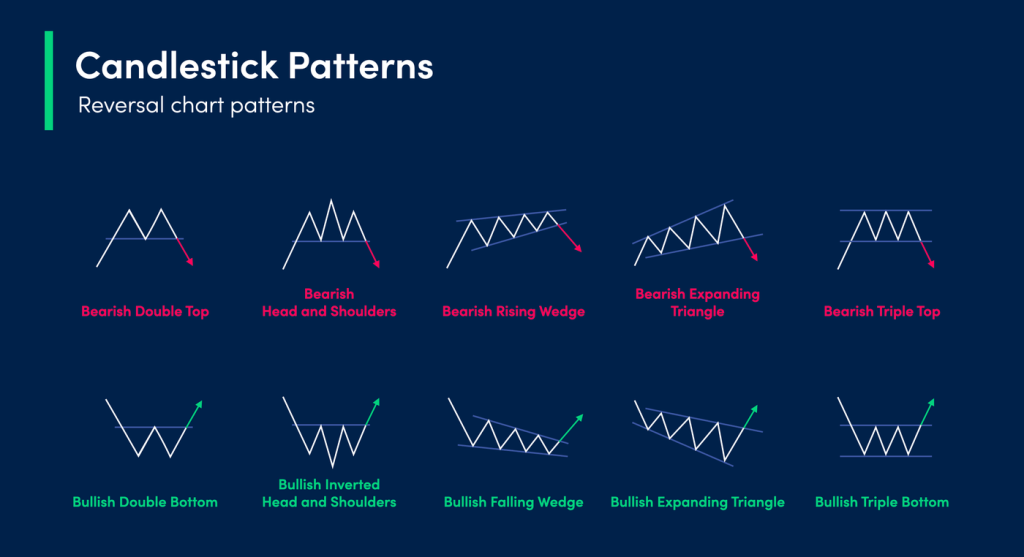
Chart Patterns 101: Spotting Reversals with Head & Shoulders & Double Bottoms

January 24, 2026 by n8n Nayan

Ever feel like the market is speaking a secret language? Price charts are its vocabulary, and specific patterns are its most telling phrases. For traders, learning to spot these patterns is like learning to read the market’s intentions. Today, we’re decoding two of the most powerful and reliable reversal patterns: the Head and Shoulders (a bearish signal) and the Double Bottom (a bullish signal). Mastering these can help you identify potential trend changes before the crowd catches on.

The Head and Shoulders Pattern: The Classic Trend Killer

This pattern signals that an uptrend is exhausted and a bearish reversal is likely. It gets its name from its distinct shape, which resembles a head with two shoulders.

How it Works

Think of it as a story of failed momentum. The price makes a high (left shoulder), pulls back, then makes an even higher high (the head). It pulls back again, and on its next attempt to rally, it can only reach about the same height as the first shoulder (right shoulder) before falling. This failure to make a new high shows that buying pressure is drying up.

The Setup

1. Identify the Uptrend: The pattern forms after a sustained move higher.
2. Spot the Three Peaks: Look for three consecutive peaks.
* Left Shoulder: A peak followed by a decline.
* Head: A higher peak followed by a decline.
* Right Shoulder: A lower peak (similar height to the left shoulder) followed by a decline.
3. The Neckline: This is the key. Draw a trendline connecting the low points (the troughs) between the shoulders and head. This is your support level.

Entry & Exit Rules

* Confirmation is KEY: The pattern is only valid once the price closes below the neckline after the right shoulder forms. This is your sell/short signal.
* Price Target: A common method is to measure the vertical distance from the top of the head down to the neckline. Then, project that same distance downward from the neckline breakout point. This gives you a minimum expected move.
* Stop Loss: A logical place is just above the right shoulder.

The Double Bottom Pattern: The Trend Rejuvenator

This is the bullish counterpart to the Head and Shoulders. It signals that a downtrend is ending and a new uptrend is beginning. It looks like a “W” on the chart.

How it Works

This pattern shows a battle where sellers try twice to push the price lower but fail. The price finds strong support at a similar level twice, indicating that buyers are aggressively stepping in at that price, creating a solid floor.

The Setup

1. Identify the Downtrend: The pattern forms after a sustained move lower.
2. Spot the Two Troughs: Look for two distinct lows that are roughly equal in price.
3. The Resistance (Breakout) Level: Draw a horizontal line across the peak that forms between the two bottoms. This is your resistance level.

Entry & Exit Rules

* Confirmation is KEY (Again!): The pattern is confirmed when the price closes above the resistance line (the peak between the bottoms). This is your buy/long signal.
* Price Target: Measure the vertical distance from the resistance line down to the bottom of the troughs. Project that same distance upward from the breakout point.
* Stop Loss: A logical place is just below the lowest point of the second bottom.

A Quick Word on Risk Management

Never risk more than 1-2% of your trading capital on a single idea. These patterns are powerful tools, but they are not infallible. A stop-loss order is non-negotiable. It’s your seatbelt for the trading journey.

Tools for the Trade

To practice spotting these patterns, you need a platform with clean, customizable charts. Platforms like [Bitget](https://partner.bitget.site/bg/SVJSDD) offer great charting tools for this setup, allowing you to draw trendlines, measure distances, and backtest your observations on different timeframes.

Conclusion: Your New Trading Lens

The Head and Shoulders and Double Bottom patterns are foundational skills for any technical trader. They provide a structured framework for understanding market psychology—shifts from greed to fear and from fear to greed. Start by looking for these shapes on historical charts. Then, move to a demo account to practice identifying the confirmation breakout without risking real capital. Remember, patience for the confirmed signal separates the prepared trader from the impulsive one. Happy charting!

Read More
Trading Ideas

Risk Management 101: The 1% Rule Explained for Safer Trading

January 24, 2026 by n8n Nayan

Risk Management 101: The 1% Rule Explained for Safer Trading

Imagine watching your portfolio swing wildly with every market move, your emotions tied directly to the charts. Now imagine having a simple rule that keeps you in the game, no matter what happens. That’s the power of proper risk management, and the 1% Rule is your first line of defense.

While no strategy guarantees profits, managing your risk is what separates traders who survive from those who get wiped out. Today, we’re breaking down one of the most fundamental principles in trading.

What is the 1% Rule?

The 1% Rule is a straightforward risk management guideline that limits your potential loss on any single trade to 1% of your total trading capital. It’s not about how much you can make, but how much you’re willing to lose.

Think of it as a seatbelt for your portfolio—you hope you never need it, but you’ll be glad it’s there when volatility hits.

How It Works: The Simple Math

The Calculation

Your risk per trade = Your total trading capital × 0.01

Example: If you have a $10,000 trading account:
– Your maximum risk per trade = $10,000 × 0.01 = $100

This means if a trade goes against you, you’ll exit before losing more than $100 on that specific position.

The Setup: Position Sizing

This is where the 1% Rule gets practical. You don’t just risk $100—you calculate your position size based on where you’ll exit if you’re wrong.

The Formula:
Position Size = (Risk per Trade) ÷ (Distance to Stop-Loss)

Let’s say you want to buy Bitcoin at $60,000 and place your stop-loss at $58,000:
– Risk per trade: $100
– Risk per unit: $60,000 – $58,000 = $2,000
– Position size: $100 ÷ $2,000 = 0.05 BTC

You’d buy 0.05 BTC, knowing that if price drops to $58,000, you’ll lose exactly $100 (1% of your capital).

Entry & Exit Rules

Before You Enter

1. Calculate your 1% risk amount based on current capital
2. Determine your stop-loss price before entering the trade
3. Calculate your position size using the formula above
4. Stick to your numbers—no emotional adjustments

When to Exit

– Stop-Loss Hit: Exit immediately at your predetermined price
– Profit Target Reached: Consider taking partial profits or moving your stop-loss to breakeven
– Rule Violation: If you can’t place a proper stop-loss that respects the 1% rule, skip the trade

Risk Management Pro Tip

The 1% Rule works even better when combined with correlation awareness. If all your trades are in similar assets (like multiple tech stocks or correlated cryptocurrencies), you might effectively be risking 3-4% even with individual 1% stops. Diversify across uncorrelated assets to truly manage your total risk.

Where to Practice This Strategy

Mastering risk management requires practice in real market conditions without real money on the line. You can practice this strategy on Binance using their demo or live markets. Their platform allows you to set stop-loss orders and calculate position sizes easily, making it ideal for implementing the 1% Rule consistently.

Conclusion

The 1% Rule isn’t about getting rich quick—it’s about staying in the game long enough to let your edge play out. By limiting each trade’s downside, you ensure that no single loss can significantly damage your portfolio. This creates psychological freedom to make clear-headed decisions and survive the inevitable losing streaks every trader faces.

Remember, trading is a marathon, not a sprint. The traders who last aren’t necessarily the ones with the best entries, but those with the best exits and risk management. Start implementing the 1% Rule today, and trade with confidence knowing you’ve built a foundation that can withstand market storms.

Read More
Learn

Evil Twin WiFi Attacks Explained: A Complete Guide to Crypto Security

January 19, 2026 by n8n Nayan

Imagine you’re at an airport, tired from a long flight, and you need to check your crypto portfolio. The “Free Airport WiFi” seems like a lifesaver. Hours later, your funds are gone. This isn’t a hypothetical scenario—it’s an Evil Twin WiFi attack, a growing threat that security experts warn is “more common than people think.” According to cybersecurity firm Halborn, these attacks specifically target travelers at airports, cafes, and hotels where people desperately seek free internet. For crypto users, understanding this threat is crucial because it doesn’t require sophisticated hacking—just one moment of distraction. This guide breaks down how Evil Twin attacks work, why they’re particularly dangerous for cryptocurrency holders, and provides actionable steps to protect your digital assets. You’ll learn to identify fake networks, understand what attackers can actually steal, and implement a simple security setup for safe travel.

Read time: 8-10 minutes

Understanding Evil Twin WiFi Attacks for Beginners

An Evil Twin WiFi attack occurs when a hacker sets up a malicious wireless network that mimics a legitimate one. Think of it like a skilled forger creating a perfect replica of a bank’s front door—you walk in thinking you’re safe, but you’ve actually entered a trap. In technical terms, attackers clone the network name (SSID) and security settings of a real WiFi hotspot, tricking your device into connecting automatically. Once connected, all your internet traffic passes through their system.

Why do hackers create these networks? They solve a simple problem for criminals: gaining direct access to your data without breaking encryption. While strong encryption protects specific communications, an Evil Twin puts the attacker in the middle of your connection. A real-world crypto example happened last year when Australian Federal Police charged a man for setting up fake WiFi access points at an airport to capture personal data. For cryptocurrency users, the danger isn’t just about stolen passwords—it’s about the complete compromise of your digital financial life.

The Technical Details: How Evil Twin Attacks Actually Work

Understanding the mechanics helps you appreciate the sophistication—and limitations—of this attack vector. Here’s the step-by-step process:

1. Network Cloning: The attacker uses portable hardware (often a smartphone or small router) to broadcast a WiFi network with an identical name to a legitimate one. For example, “Airport_Free_WiFi” instead of the real “Airport-Free-WiFi.”

2. Signal Boosting: They typically use a stronger signal than the legitimate network. Your phone or laptop automatically connects to the strongest available signal with a familiar name, prioritizing the malicious twin.

3. Traffic Interception: Once connected, all your unencrypted internet traffic flows through the attacker’s device. They can see every website you visit, every form you submit, and every login attempt.

4. The Phishing Layer: This is where crypto theft happens. The attacker often redirects you to fake login pages for exchanges, wallet services, or email providers. These pages look identical to the real ones but capture your credentials, seed phrases, and 2FA codes.

Why this structure matters for you: The attack doesn’t magically break blockchain encryption. Instead, it creates the perfect environment for social engineering—tricking you into voluntarily giving up your security information. As security expert 23pds from SlowMist notes: “Evil Twin attacks win by getting you to make a mistake.” The technical setup merely creates the opportunity; human error completes the theft.

Current Market Context: Why This Matters Now

As cryptocurrency adoption grows, so does the sophistication of attacks targeting retail users. In 2025, social engineering attacks cost the crypto ecosystem billions, with Evil Twin attacks representing a particularly insidious vector because they exploit normal behavior—connecting to free WiFi. With more people managing crypto on mobile devices while traveling, the attack surface has expanded dramatically.

Recent trends show attackers focusing on high-traffic locations: not just airports, but also crypto conferences, co-working spaces, and hotels frequented by digital nomads. Kraken’s security chief Nick Percoco recently highlighted the lack of security awareness at crypto events, making them prime hunting grounds. The proliferation of mobile crypto wallets and DeFi applications means users are performing sensitive transactions outside their secure home networks more than ever before. Understanding this threat isn’t just about avoiding theft—it’s about maintaining confidence in managing your assets anywhere in the world.

Competitive Landscape: How WiFi Security Compares

Different network environments offer varying levels of protection against Evil Twin attacks. Here’s how they compare:

| Feature | Public WiFi (Unsecured) | Mobile Hotspot (Your Own) | VPN-Protected Connection | Wired/Ethernet Connection |

| Evil Twin Risk | Extremely High. Automatic connection likely, no verification. | None. You control the network source. | Low. Traffic is encrypted before leaving your device. | None. Physical connection cannot be spoofed wirelessly. |

| Data Visibility | Full visibility for attacker on unencrypted traffic. | Your visibility only. | Encrypted to VPN provider. Attacker sees only gibberish. | Your visibility only. |

| Setup Complexity | None—just connect. | Simple—enable on phone. | Moderate—requires subscription and app. | Complex—requires physical port. |

| Best For | Reading news, casual browsing. | All crypto activities while traveling. | Banking, email, moderate-risk tasks. | Maximum security transactions. |

| Cost | Free. | Uses mobile data. | $5-15/month. | Free (if available). |

Why this matters: For crypto users, the choice isn’t just about convenience—it’s about risk management. While public WiFi is free, your mobile hotspot provides enterprise-grade security for the price of some data. Understanding these differences helps you make informed decisions about where and how to manage your assets.

Practical Applications: Real-World Use Cases

When should you be most vigilant about Evil Twin attacks?

  • Traveling Crypto Management: Checking portfolio balances, making time-sensitive trades, or accessing exchanges while at airports or hotels. These high-stress, time-constrained situations make you vulnerable to rushed decisions.
  • Conference and Event Participation: Crypto conferences are prime targets. Attackers know attendees are checking wallets, making connections, and potentially transferring funds between sessions.
  • Remote Work with Crypto: Digital nomads working from cafes while managing investments or interacting with DeFi protocols. The routine nature lowers vigilance.
  • Emergency Transactions: When you “need to shift some crypto funds in a hurry” (as in the airport scenario), you’re more likely to bypass normal security checks.
  • New Device Setup: Connecting a new phone or laptop to public WiFi to download wallet apps or exchange software could expose your initial credentials.

Risk Analysis: Expert Perspective

Primary Risks for Crypto Users:

1. Credential Capture: Attackers can steal exchange login credentials, email passwords, and even intercept 2FA codes if they redirect you to fake sites.

2. Seed Phrase Theft: As 23pds warns, victims are still “tricked into typing their seed phrase” on fake wallet recovery pages. This gives attackers complete, irreversible control over your wallets.

3. Session Hijacking: Even without passwords, attackers might capture browser cookies or session tokens, allowing them to access already-logged-in accounts.

4. Malware Distribution: Fake “helper tools” or “required updates” pushed through the network can install keyloggers or clipboard hijackers that target crypto addresses.

What They CANNOT Do (Important Limitations):

  • Cannot break blockchain encryption: They cannot reverse-engineer private keys from public addresses through mathematical means.
  • Cannot steal funds from properly secured cold wallets: If your seed phrase has never been typed on an internet-connected device and your hardware wallet remains offline, funds are safe.
  • Cannot decrypt properly encrypted VPN traffic: Quality VPNs use encryption that even network operators cannot break.

Mitigation Strategies:

  • Assume public WiFi is hostile: This mindset shift is your first and best defense.
  • Use your mobile hotspot: As Halborn’s Steven Walbroehl recommends, this is the single most effective protection.
  • Verify networks verbally: If you must use public WiFi, ask staff for the exact network name and connection process.
  • Disable auto-connect: Turn off your device’s automatic connection to “known” networks to prevent silent hijacking.

Beginner’s Corner: Quick Start Guide for Safe Travel

Follow these steps when traveling with cryptocurrency:

1. Prepare Before You Go: Move the majority of your holdings to a hardware wallet or secure cold storage. Create a separate “travel wallet” with only the funds you might need.

2. Enable Mobile Hotspot: Before leaving, test that your phone’s hotspot feature works and understand your data plan limits. This is your primary network.

3. Disable Auto-Connect: On your devices, go to WiFi settings and turn off “Auto-join” or “Connect automatically” for all networks.

4. Bookmark Critical Sites: Before traveling, bookmark your exchange, wallet, and email login pages. Always use these bookmarks—never Google or click ads.

5. Install a Trusted VPN: Research and install a reputable VPN service. Connect to it before doing anything sensitive if you must use unfamiliar networks.

6. Verify Addresses Manually: When sending crypto, always manually verify the first and last 4 characters of addresses, even when copying from what you think is a legitimate source.

7. Never Enter Seed Phrases: No legitimate service will ever ask for your 12 or 24-word recovery phrase while you’re connected to a network.

Common Mistakes to Avoid:

  • Connecting to networks with “FREE” in the name
  • Performing wallet recoveries or seed phrase backups on any network
  • Clicking “Update Required” pop-ups while on public WiFi
  • Assuming a network is safe because it requires a password

Future Outlook: What’s Next

As awareness grows, both attackers and defenders are evolving:

1. AI-Powered Attacks: Future Evil Twins may use AI to create more convincing fake login pages that adapt to individual users’ behavior patterns.

2. WiFi Security Standards: New protocols like WPA3 offer improved protection against certain interception techniques, but adoption in public spaces remains slow.

3. Device-Level Protections: Mobile operating systems are increasingly warning users about unencrypted connections and certificate mismatches.

4. Decentralized Alternatives: Projects exploring decentralized WiFi or blockchain-based identity verification for networks could eventually mitigate these attacks, but these solutions are years from mainstream adoption.

The fundamental vulnerability—human trust in familiar network names—will persist. Your best long-term strategy is developing security habits that don’t rely on network trust at all.

Key Takeaways

  • Evil Twin WiFi attacks work by mimicking legitimate networks to intercept your data and trick you into revealing sensitive information like exchange logins or seed phrases.
  • The attack itself doesn’t steal crypto—your actions while connected do. Never check exchanges, move funds, or enter seed phrases on public WiFi.
  • Your mobile hotspot is your most secure travel network, effectively eliminating the Evil Twin threat for all practical purposes.
  • Adopt a layered travel security strategy: Use separate wallets for travel, disable auto-connect, bookmark critical sites, and manually verify all addresses.
bitcoin blockchain cryptocurrency
Read More
News

South Korea Proposes 5% Crypto Cap for Corporations

January 19, 2026 by n8n Nayan

November 26, 2024 — South Korea’s Financial Services Commission (FSC) has drafted guidelines to limit corporate cryptocurrency holdings to 5% of equity capital. The rules, expected to be finalized by February, would restrict institutional investments to the top 20 digital assets by market cap. This regulatory move aims to control market volatility while cautiously opening the door for greater institutional participation in the crypto market.

Immediate Details & Direct Quotes

The draft framework from South Korea’s financial regulator introduces a significant new limit for companies and professional investors. Under the proposed guidelines, corporations would only be permitted to invest in cryptocurrencies ranked within the top 20 by market capitalization. A key point of ongoing debate is whether dollar-pegged stablecoins like Tether (USDT) will be included in this permissible list.

The FSC’s measures reflect a cautious approach to expanding institutional crypto access while safeguarding market stability amid growing corporate interest, according to analysts cited in the report. The finalized rules are anticipated between January and February, with corporate trading expected to begin later this year.

Market Context & Reaction

The proposed 5% cap is likely to channel significant liquidity toward major cryptocurrencies. Analysts note that this concentration will primarily benefit Bitcoin (BTC) and potentially Ethereum (ETH), with limited immediate impact on smaller altcoins. Observers suggest the limit may not pose a severe constraint initially, as most companies are unlikely to reach the 5% threshold in the early stages of adoption.

To manage the anticipated influx of institutional capital, the framework will also establish price limits and split trading rules designed to mitigate volatility. Market participants are closely monitoring the country’s upcoming Digital Asset Basic Act, expected in the first quarter, which will formalize regulations for won-pegged stablecoins.

Background & Historical Context

This regulatory development is part of South Korea’s broader effort to create a structured digital asset ecosystem. The forthcoming Digital Asset Basic Act is seen as pivotal for the local market structure, as it will not only set rules for stablecoins but also open the door to South Korea’s first spot crypto exchange-traded funds (ETFs).

The stablecoin regulations are viewed as particularly influential for South Korea’s broader crypto ecosystem. These steps represent a methodical approach by regulators to integrate digital assets into the traditional financial system while implementing guardrails to protect market integrity and investors.

What This Means

In the short term, the 5% cap and top-20 restriction will likely solidify Bitcoin and Ethereum’s dominance within South Korea’s institutional crypto landscape, concentrating trading volume and liquidity. The formalization of won-stablecoin rules and the introduction of spot crypto ETFs, expected under the Digital Asset Basic Act, could serve as major catalysts for local market maturation and adoption.

For investors and companies, this signals a more regulated but accessible environment for corporate crypto investment. The establishment of clear rules, including volatility controls, may encourage more traditional firms to cautiously enter the digital asset space. Market participants should monitor the final language regarding stablecoin inclusion and the specific implementation timeline for corporate trading, expected later this year.

Meta Description: South Korea’s FSC proposes a 5% crypto cap for corporations, restricting investments to top 20 coins. New rules aim to curb volatility as institutional participation grows.

Primary Keywords: South Korea, Crypto Regulation, Institutional Investment, Bitcoin, Stablecoin

bitcoin blockchain cryptocurrency news
Read More
News

Key Crypto Market Structure Bill Delayed, Pushed to February

January 15, 2026 by n8n Nayan

January 15, 2026 — A major U.S. crypto market structure bill has been delayed but is not dead, with negotiations set to continue into February. According to Senator Cynthia Lummis, the legislation remains viable despite intense lobbying opposition from traditional finance. The delay provides the crypto industry crucial weeks to address key issues like stablecoin yield and DeFi protections.

Immediate Details & Direct Quotes

The Senate Banking Committee has postponed a critical hearing on the comprehensive crypto market structure legislation. Committee Chairman Tim Scott characterized the move as a “brief pause,” pushing for further negotiation. “Everyone is still at the negotiating table,” confirmed Senator Cynthia Lummis, who chairs the committee’s crypto subcommittee, in a social media post on Thursday.

Significant disagreements persist, particularly around provisions restricting how stablecoin yield rewards can be paid—a top issue for Coinbase. “We are hard-pressed to see a different middle ground,” wrote Jaret Seiberg, a financial policy analyst at TD Cowen, in a client note. “It is why this could end up being a straight up or down vote on whether stablecoins can earn rewards on platforms.” Despite dropping support for the current draft, Coinbase CEO Brian Armstrong struck an optimistic note, saying he’s “quite optimistic that we will get to the right outcome with continued effort.”

Market Context & Reaction

The delay follows a fierce lobbying battle where Wall Street banks and securities industry representatives argued that stablecoin yield threatens the traditional banking system’s deposit base. This argument gained traction with some lawmakers, creating headwinds for the crypto industry. “We would give an edge to the banks on such a vote, even though crypto campaign contributions are greater,” Seiberg noted, highlighting the political influence of community banks.

Parallel to the Banking Committee’s work, the Senate Agriculture Committee is continuing its own bipartisan effort, with a hearing currently scheduled for January 27. The crypto industry’s substantial political influence, demonstrated by the Fairshake PAC’s war chest of over $100 million for the midterm elections, is now being tested. Cody Carbone of the Digital Chamber emphasized the urgency, stating, “We cannot afford to walk away from the table at a moment when clarity is within reach.”

Background & Historical Context

This legislative push is years in the making, with crypto firms being newer entrants to Washington’s policy arena compared to established banking and securities lobbyists. The current bill follows the path of previous efforts like the GENIUS Act, which faced similar roadblocks before passing with bipartisan support. The process has been marked by typical Congressional volatility, including setbacks last October when proposed DeFi rules caused concern.

A major point of contention unrelated to market structure is a Democratic push for an ethics provision, focused on potential conflicts of interest. Senator Ruben Gallego, the lead Democrat on ethics, told reporters he would need a guarantee on such a provision before supporting the overall bill. This external issue remains out of the direct control of crypto negotiators, who are focused on policy details surrounding yield, DeFi, and regulatory jurisdiction.

What This Means

In the short term, the crypto industry has a narrow window to regroup and negotiate more favorable terms on stablecoin yield and DeFi protections before the Senate Banking Committee potentially revisits the bill in February. The coming weeks will be a critical test of the sector’s lobbying power and its ability to counter traditional finance narratives.

Long-term, the passage of any comprehensive market structure bill would provide unprecedented regulatory clarity for the U.S. digital asset industry. However, the intense debate underscores the significant friction between innovative crypto models and established financial frameworks. For investors and companies, the outcome will determine the operational viability of key services like yield-bearing stablecoins and decentralized finance platforms in the United States.

Meta Description: The U.S. Senate delays a major crypto market structure bill to February amid a lobbying fight with Wall Street, focusing on stablecoin yield and DeFi rules.

Primary Keywords: crypto market structure bill, Senate Banking Committee, stablecoin yield, DeFi protections, lobbying

bitcoin blockchain cryptocurrency news
Read More
News

Enlivex Therapeutics Bets $212 Million on RAIN Prediction Market Protocol

January 14, 2026 by n8n Nayan

February 26, 2025 — Enlivex Therapeutics Ltd. is deploying a significant portion of a recent $212 million private equity raise to build a digital asset treasury centered on the RAIN token. The clinical-stage biotech firm is acquiring billions of the prediction market tokens, a move analysts call a major, unpriced value driver. HC Wainwright has reaffirmed its Buy rating on Enlivex and raised its price target to $13 per share based on this crypto strategy and ongoing drug trial progress.

Immediate Details & Direct Quotes

Enlivex Therapeutics, known for its osteoarthritis drug candidate Allocetra, is making a substantial pivot into the crypto asset space. The company has purchased 212 million RAIN tokens at $1 per token, using a mix of U.S. dollars and USDT stablecoin to establish what it terms its first RAIN token treasury strategy.

The RAIN token powers a fully decentralized prediction and options protocol built on the Arbitrum network. The platform enables users to create and trade custom markets, with outcomes resolved via artificial intelligence and governed by a deflationary buy-and-burn token mechanism. This strategic investment represents a significant blend of biotechnology and blockchain technology.

Analyst Raghuram Selvaraju of HC Wainwright & Co. highlighted the potential value, stating, “Enlivex’s holdings of roughly 76 billion RAIN tokens—plus an option to buy nearly $918 million more at $0.0033 per token—could create a future value driver currently unpriced by the market.”

Market Context & Reaction

The RAIN protocol has demonstrated substantial early traction since its launch in September 2025. Over 3.5 months, the platform has accumulated $1.5 billion in total trading volume, with daily volumes averaging approximately $55 million. This activity provides a foundational metric for Enlivex’s treasury bet.

Market analysts point to the success of established prediction market platforms like Polymarket and Kalshi, the latter reaching an $11 billion valuation, as precedent for the growth potential in this decentralized sector. Enlivex’s aggressive accumulation of RAIN tokens at a deep discount through its option is viewed as a strategic attempt to capture this potential upside directly on its balance sheet.

The financial markets reacted positively to the dual-strategy announcement. Following the news, HC Wainwright not only reiterated its Buy rating on Enlivex but also raised its 12-month price target to $13 per share, citing both the RAIN token treasury’s potential and continued clinical progress.

Background & Historical Context

Enlivex Therapeutics is primarily a clinical-stage biotechnology company. Its lead drug candidate, Allocetra, is designed to treat osteoarthritis. Recent six-month clinical trial data has shown promising results, including substantial pain reduction and functional improvement in patients aged 60 and older. Additional studies in basal thumb osteoarthritis are expected to report results soon.

The company’s foray into digital assets is funded by a $212 million private equity deal completed last year. Rather than allocating all capital to biotech R&D, management has decided to diversify a large portion into a crypto-based treasury strategy. This move reflects a growing trend of traditional firms exploring blockchain-based assets for treasury management and value appreciation, though it remains a novel strategy for a biotech entity.

What This Means

In the short term (30-90 days), the market will watch for further accumulation of RAIN tokens by Enlivex and any updates on the exercise of its substantial purchase option. The performance of the RAIN protocol’s trading volume will also be a key indicator of the treasury asset’s health.

For the long term (6-12 months), the success of this strategy hinges on two parallel tracks: the continued adoption and valuation growth of the RAIN prediction market, and the clinical success of Allocetra in ongoing trials. Positive data from either front could significantly impact Enlivex’s valuation.

Investors and observers should monitor:

  • Top-line results from the ongoing Allocetra trials in basal thumb osteoarthritis.
  • RAIN protocol metrics, including user growth and sustained trading volume.
  • Any further announcements from Enlivex regarding its digital asset treasury strategy.

Disclaimer: This article is for informational purposes only and is not financial advice. Please conduct your own research before making any investment decisions.

—

Meta Description: Enlivex Therapeutics invests $212M into RAIN prediction market token, pivoting biotech treasury strategy. HC Wainwright raises price target to $13.

Primary Keywords: Enlivex, RAIN token, prediction market, crypto treasury, biotech

bitcoin blockchain cryptocurrency news
Read More
Blockchain Business Crypto Ethereum News

Bitmine Stakes $266 Million in Ethereum, Pushing Total Past $3.3 Billion

January 11, 2026 by n8n Nayan

January 11, 2026 — Bitmine has staked an additional 86,400 Ethereum (ETH) worth $266.3 million, bringing its total staked holdings to a massive 1.08 million ETH valued at $3.33 billion. The move, executed on January 10, accelerates the company’s aggressive shift from passive accumulation to active yield generation on its Ethereum treasury, which now represents over 3% of the asset’s total supply.

Immediate Details & Direct Quotes

The latest staking transaction marks a continuation of a strategy that began in late December 2025. According to on-chain data shared by Lookonchain, Bitmine’s total staked Ethereum now stands at 1,080,512 tokens. This activity is part of a deliberate pivot overseen by Tom Lee, co-founder of Fundstrat Global Advisors and Chairman of Bitmine, who is steering the company from Bitcoin mining to active Ethereum treasury management.

Under Lee’s leadership, the company has accumulated over 4.1 million Ethereum, representing approximately 3.43% of ETH’s total circulating supply. The firm has stated it aims to acquire 5% of all Ethereum tokens. Lee has noted that Bitmine remains the largest “fresh money” buyer of ETH globally, signaling a major institutional commitment to the cryptocurrency.

Market Context & Reaction

The staking spree has been rapid and substantial. Bitmine initiated its staking operations on December 26, 2025, with a $219 million deposit. The pace intensified dramatically, with the company staking $1 billion worth of ETH over just two days through December 28. By January 4, 2026, its staked balance had reached 659,219 ETH ($2.1 billion).

The acceleration continued into the new year, with an additional $1.46 billion staked on January 6. A deposit of roughly 99,800 ETH ($344.4 million) followed on January 8, bringing the total to $2.95 billion before the final January 10 transaction pushed it over the $3.3 billion mark. At current estimated staking yields near 3.12% annually, Bitmine’s 1.08 million staked ETH could generate approximately 33,700 ETH in rewards per year.

Background & Historical Context

Bitmine’s strategic shift is a recent development. Tom Lee became chairman on June 30, 2025, and immediately pivoted the company’s focus. Starting from zero Ethereum holdings, Bitmine aggressively accumulated 1.15 million ETH worth $4.9 billion by mid-August 2025 after announcing a $500 million funding placement in July to accelerate purchases.

The company’s holdings grew to 3.86 million ETH by its December 8 earnings release and surpassed 4 million ETH on December 21, valued at over $12 billion. As of January 4, 2026, Bitmine’s total treasury holdings were reported at 4,143,502 ETH, worth between $13.2 and $14.2 billion. The move to stake roughly one-quarter of its holdings marks a new phase of active yield generation from its massive treasury.

What This Means

Bitmine’s colossal staking activity has several immediate implications. In the short term, it removes a significant amount of Ethereum from liquid circulation, which can impact market supply dynamics. It also demonstrates a growing institutional model of treating major cryptocurrencies like Ethereum as yield-generating treasury assets, similar to bonds.

For the broader Ethereum ecosystem, such large-scale staking by a single entity reinforces network security but also raises questions about concentration. For investors and the market, Bitmine’s public strategy and targets provide a clear benchmark for institutional Ethereum accumulation. The company’s goal to own 5% of the total supply indicates this aggressive acquisition and staking strategy is likely to continue, potentially influencing both price and staking reward metrics for all network participants.

Meta Description: Bitmine stakes $266M in Ethereum, pushing total staked past $3.3B as part of an aggressive yield-generation strategy from its 4.1M ETH treasury.

Primary Keywords: Ethereum, staking, Bitmine, institutional investment, ETH

bitcoin blockchain cryptocurrency news
Read More
Bitcoin Crypto News

India’s FIU Mandates Live Selfies, Geolocation for Crypto Sign-Ups

January 11, 2026 by n8n Nayan

January 11, 2026 — India’s Financial Intelligence Unit (FIU) has issued stringent new know-your-customer (KYC) and anti-money laundering (AML) requirements for cryptocurrency exchanges. The guidelines, reported today, mandate live selfie verification with AI detection and geolocation tracking for all new user onboarding. This regulatory tightening reflects ongoing concerns from Indian tax authorities that crypto assets facilitate tax evasion and complicate enforcement.

Immediate Details & Direct Quotes

According to a report from The Times of India, the new rules force regulated crypto platforms to verify users through software that tracks eye and head movements in live selfie pictures. This measure is explicitly designed to prevent AI-generated deep fakes from bypassing the KYC process. Exchanges must also collect a user’s geolocation and IP address at the moment of account creation, along with a timestamp.

To satisfy AML requirements, platforms are now required to verify a user’s linked bank account by sending a small test transaction. Additionally, users must submit government-issued photo identification and verify both their email and mobile number to create an account. These steps represent a significant escalation in India’s regulatory approach to its vast crypto market.

The move aligns with statements from India’s Income Tax Department (ITD). Officials told parliamentary lawmakers that “cryptocurrencies and decentralized finance platforms undermine tax enforcement.” They specifically cited decentralized exchanges, anonymous wallets, and the cross-border nature of crypto as challenges for efficient taxation.

Market Context & Reaction

India represents one of the world’s largest total addressable markets for cryptocurrency, with a population exceeding 1.4 billion. The potential for this population to come onchain has long been viewed as a major catalyst for a fresh wave of global crypto investment. The new rules, however, create a higher barrier to entry for new users.

Market reaction details were not immediately available in the source report. The regulatory stance comes as India maintains a firm 30% tax on gains from cryptocurrency sales. Under the current Income Tax Act, users can only deduct the cost basis against gains and cannot harvest tax losses to offset gains from other transactions. This combination of high taxation and strict onboarding could influence user growth and exchange operations within the jurisdiction.

Background & Historical Context

India’s relationship with cryptocurrency has been complex and evolving. The regulatory landscape has shifted from proposed bans to taxation and now to stricter operational controls for exchanges. The FIU’s latest action is a direct extension of its role as the agency that sets AML and KYC regulations for the financial sector, now firmly applied to virtual digital asset service providers.

The tax authority’s concerns are not new. Officials have repeatedly argued that the permissionless and pseudonymous features of blockchain technology complicate tax collection. The specific mention of decentralized exchanges and cross-border functionality highlights the ongoing tension between regulatory oversight and the foundational principles of decentralized finance (DeFi). This development follows the Reserve Bank of India’s previous urgings for countries to prioritize central bank digital currencies (CBDCs) over stablecoins.

What This Means

Short-Term Impact (30-90 Days):

  • Crypto exchanges operating in India must rapidly implement the new live selfie and geolocation verification systems.
  • New user onboarding will become more cumbersome, potentially slowing sign-up rates.
  • Existing users may face additional verification steps for certain platform features or higher transaction limits.

Long-Term Implications (6-12 Months):

  • The regulations could set a precedent for other jurisdictions considering similar biometric and location-based KYC measures.
  • Exchanges may face increased operational costs for compliance, which could be passed on to users.
  • The clarity, though strict, could provide a more stable framework for compliant businesses to operate, separating them from non-compliant platforms.

User Action Items:

  • New users in India should be prepared for a more detailed verification process requiring a live selfie session and document submission.
  • All users should ensure their linked bank account information is accurate to receive the small verification transaction.
  • Traders must continue to account for the 30% capital gains tax with no loss harvesting, factoring this into their investment strategy.
bitcoin blockchain cryptocurrency news
Read More

Posts pagination

Previous page Page 1 … Page 35 Page 36 Page 37 Next page
START TRADING USING BIGIT
MOST READ
Latest
News
Peter Schiff Warns US Economy Faces 'Worst Inflation Yet' at VRIC Media Interview
17 May, 2026
Real World Assets
The Role of Oracles in Real World Assets (Chainlink CCIP)
17 May, 2026
Learn
What Prediction Markets Tell Us About the Massie vs. Gallrein Race: A Beginner’s Guide
17 May, 2026
Categories
  • Bitcoin
  • Blockchain
  • Business
  • Crypto
  • Ethereum
  • Guide
  • Learn
  • News
  • Real World Assets
  • Trading Ideas
Crypto Simplified
About

CryptoSimplified.net brings you the latest crypto insights, news, and guides in an easy-to-understand way. Stay updated and make smarter crypto decisions with us!

cryptosimplified14@gmail.com
Contact Us
Categories
  • Bitcoin
  • Blockchain
  • Business
  • Crypto
  • Ethereum
  • Guide
  • Learn
  • News
  • Real World Assets
  • Trading Ideas
Qucik Links

  • News

  • Learn Trading

  • General Trading

  • Glossary

  • Get Started Today

  • Privacy Policy

  • Terms & Conditions

  • Disclaimer
Start Trading
Copyright © 2026 CryptoSimplified. All Rights Reserved.